Website Redesign Cost in India

A website redesign sounds simpler than building from scratch because the business already has a website. Sometimes it is. You already know your services, own a domain and may have useful content and analytics. But redesign projects can also be more complex. Old URLs need to be preserved, weak content needs to be separated from valuable content, integrations must keep working and the new design has to launch without damaging existing search traffic or customer journeys. The cost therefore depends on whether you are changing only the visual layer or rebuilding the structure, content and technology underneath it. This guide explains how to budget for a website redesign in India and how to avoid paying for a prettier version of the same underlying problems.
Table of Contents
- Typical Website Redesign Cost in India
- Redesign vs Rebuild: Know Which Project You Actually Have
- How Design Scope Changes the Price
- Content Audit: What Should Stay, Change or Disappear?
- SEO Migration Is a Core Redesign Task
- Platform Migration Costs
- Performance Improvements During a Redesign
- Ecommerce Redesigns Need Extra Care
- Integrations and Forms
- Analytics and Measurement
- What Makes Redesign Cost Increase?
- How to Reduce Redesign Risk and Cost
- When Is a Website Redesign Worth the Investment?
- Redesign vs Continuous Improvement
- Final Takeaway
- How to Audit the Existing Website Before Redesigning It
- Redesign Cost When the Current Website Has Strong SEO
- Should You Redesign in Phases?
- What a Redesign Proposal Should Include
- Post-Launch Monitoring After a Redesign
- One Final Redesign Principle
- Frequently Asked Questions
Typical Website Redesign Cost in India
A small redesign may reuse the existing platform and content while updating layouts, typography, spacing and mobile responsiveness. This can be relatively efficient.
A deeper redesign usually changes information architecture, service pages, navigation, content, forms and design system. The team has to audit what exists before creating the new version.
Large projects may also migrate platforms, rebuild hundreds of URLs, recreate integrations and protect organic traffic. At that point, the redesign behaves more like a new website plus a migration project.
Website Redesign Planning Ranges
| Redesign type | Broad planning range | Typical scope |
|---|---|---|
| Visual refresh | ₹25,000–₹60,000 | Same structure/platform, updated look |
| Small business redesign | ₹40,000–₹1,00,000 | New UI, mobile UX, content cleanup |
| Marketing/corporate redesign | ₹75,000–₹2,50,000+ | New architecture, content, SEO migration |
| Ecommerce redesign | ₹1,00,000–₹4,00,000+ | Collections, product UX, migration, integrations |
| Large/custom rebuild | ₹2,00,000+ | Platform change, custom functionality, complex migration |
Redesign vs Rebuild: Know Which Project You Actually Have
A redesign changes how the website looks and how information is organised. A rebuild changes more of the technical foundation.
If the current platform is stable and easy to manage, you may only need new templates and content. If the site is built on outdated code, overloaded plugins or an inflexible system, preserving the old architecture can make the redesign more expensive later.
Ask the development team to audit the existing site before deciding. Reusing good infrastructure saves money. Reusing bad infrastructure only preserves technical debt.
How Design Scope Changes the Price
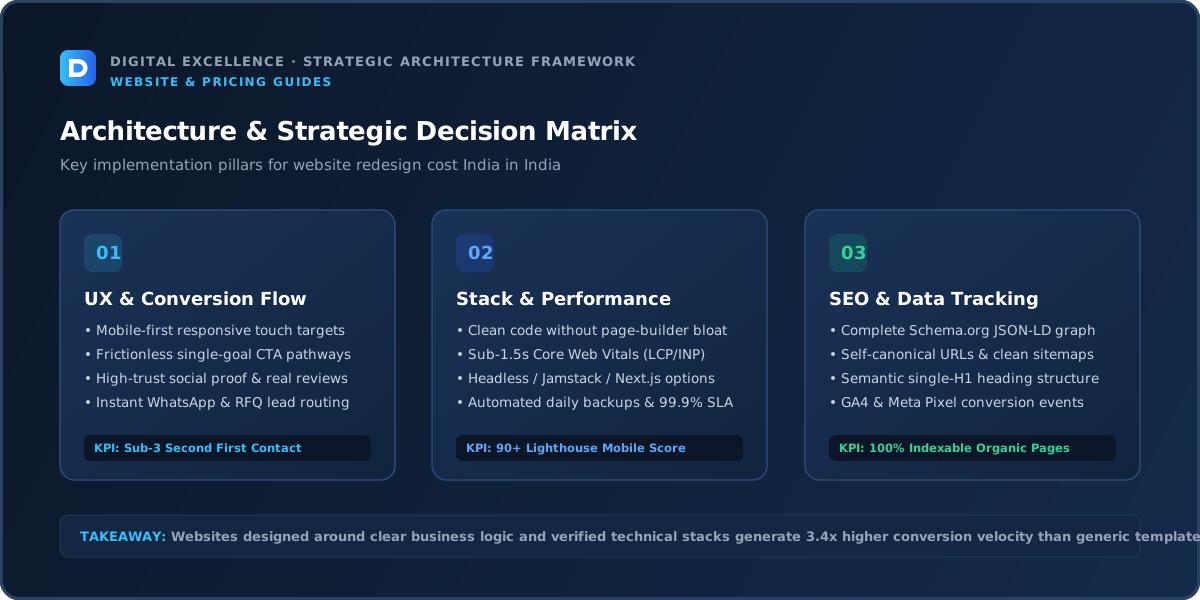
A visual refresh can reuse the existing page structure with new typography, colours and spacing. Custom UI/UX work goes deeper: new navigation, page hierarchy, reusable components, mobile layouts, interactions and conversion paths.
The number of unique templates matters. A site with 100 articles but five templates can be simpler than a 15-page brand website where every page is unique.
If the redesign includes a new brand identity, logo or photography, treat those as separate creative scopes rather than assuming they are part of web development.
Content Audit: What Should Stay, Change or Disappear?
Existing websites accumulate pages. Some generate leads and traffic; others are outdated, duplicated or no longer relevant. A redesign is an opportunity to make deliberate decisions rather than copying every old page into a new template.
Audit traffic, backlinks, conversions and business relevance. High-performing pages should be protected and improved carefully. Weak pages can be consolidated when that creates a better user experience.
Content rewriting adds cost, but blindly migrating poor content can undermine the redesign. Decide who is responsible for the audit and copy before work begins.
SEO Migration Is a Core Redesign Task
If an existing site receives organic traffic, SEO migration should be part of the project. Important URLs may have years of history, external links and rankings.
When URLs change, create appropriate redirects. Preserve valuable titles, content and internal links where they still make sense. Update sitemaps and canonical URLs. Check that the new site is indexable and that staging environments are not accidentally left blocked after launch.
A redesign can improve SEO, but a careless migration can also cause traffic loss. Do not treat redirects as a final-day detail.
For a related buying decision, see Website Redesign Pricing in India : What Changes the Quote?.
Platform Migration Costs
Moving from WordPress to Next.js, WooCommerce to Shopify or one CMS to another adds work beyond design. Content must be exported, transformed and imported. Forms, media, SEO fields and user data may need new equivalents.
A platform migration can be worthwhile when the current system is difficult to maintain or blocks important features. It should not be done simply because a newer technology sounds impressive.
Compare the long-term operational benefit with the migration cost and risk.
Performance Improvements During a Redesign
Redesigns often inherit old performance problems unless they are explicitly addressed. Large images, too many scripts, unused plugins, heavy fonts and third-party widgets can slow the new site just as they slowed the old one.
Performance work may include asset optimisation, caching, code cleanup, app or plugin reduction and better hosting.
Use the redesign to set a performance budget and remove tools that no longer create value.
Ecommerce Redesigns Need Extra Care
An ecommerce redesign affects revenue directly. Collections, search, filters, product pages, cart, checkout handoff, tracking and customer accounts need testing.
If the platform changes, product and customer data may need migration. Existing product URLs should be mapped. Paid ad tracking and merchant feeds may need updates.
Schedule ecommerce launches carefully around major sales periods. A redesign is not the ideal experiment to deploy the night before a large campaign.
Integrations and Forms
CRM, booking, payments, email tools and other integrations can break when forms and URLs change. Document current integrations before redesigning.
Decide which systems should be kept, replaced or removed. Test notifications and data flow after launch.
Businesses often discover during redesign that nobody knows why an old script exists. A clean audit can reduce future maintenance.
Analytics and Measurement
Use the existing site as a baseline. Which pages receive traffic? Which calls to action generate leads? Where do users drop off? Redesign decisions are stronger when informed by actual behaviour.
Before launch, preserve or replace analytics and conversion tracking. Annotate the launch date so performance can be compared after the redesign.
Do not judge success only by whether the new site looks more modern. Evaluate leads, sales, engagement and operational improvements.
For a useful scope comparison, read Website Redesign Didn’t Increase Sales? Here’s What to Diagnose.
What Makes Redesign Cost Increase?
Large page counts, unique templates, copywriting, new photography, platform migration, ecommerce catalogue changes, integrations and SEO migration all add effort.
Stakeholder complexity matters too. A project with six approval layers can require more project management than one with a single decision-maker.
Request a detailed scope so you can identify which work is essential and which items can move to a later phase.
How to Reduce Redesign Risk and Cost
Keep the elements that already work. Do not change every URL or integration purely for novelty. Prepare content and brand assets before development.
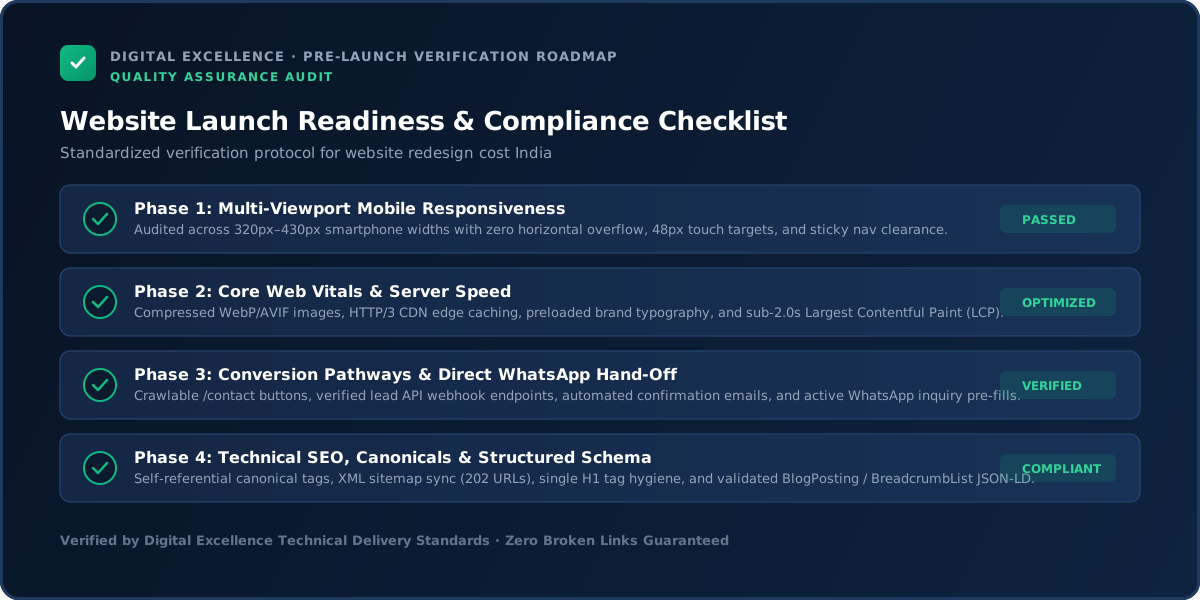
Create a redirect map before launch. Test the new site on a staging domain. Use a launch checklist for forms, analytics, metadata, robots and sitemaps.
Most importantly, define the reason for the redesign. If the objective is better lead generation, prioritise service clarity and conversion paths. If the problem is maintenance, prioritise architecture and CMS usability.
Before redesigning, capture a baseline: top organic landing pages, important URLs, leads or sales, mobile performance, forms and the user journeys that currently work. A redesign should preserve useful assets while improving named problems. Without a baseline, teams often judge success only by whether the new site looks more modern.
Create a redirect map before launch for every important URL that changes, re-test analytics and forms, and monitor Search Console after production goes live. Migration quality is part of redesign cost because a visually strong launch can still lose search visibility or measurement if these steps are skipped.
When Is a Website Redesign Worth the Investment?
A redesign can be justified when the site no longer represents the business, performs poorly on mobile, is difficult to update, creates technical problems or fails to support current marketing.
It may also be necessary after a rebrand, major change in services, platform limitations or growth into ecommerce.
Do not redesign only because the homepage feels old. If the existing site performs well, focused improvements may create more value than a complete rebuild.
Redesign vs Continuous Improvement
Not every website needs periodic demolition and reconstruction. A well-designed component system can evolve gradually. New sections, pages and visual updates can be introduced without changing the whole architecture.
Continuous improvement is especially useful when analytics reveal specific problems. Fix the pages or flows that matter rather than redesigning everything by instinct.
A full redesign is appropriate when problems are structural or the brand has changed substantially.
Final Takeaway
Website redesign cost in India depends on what you are changing underneath the new visuals. A visual refresh is one type of project. A new information architecture, platform migration and SEO preservation is another.
Start with an audit of the current site. Keep what works, remove what does not, and spend the budget on problems that affect users, marketing or operations. A successful redesign should be easier to use and easier to manage—not simply newer.
How to Audit the Existing Website Before Redesigning It
Before opening a design tool, inventory the current pages, templates, integrations and traffic. Identify the pages that generate leads, attract search visits or have external backlinks. Note broken forms, outdated services, duplicate content and pages no longer needed.
Review mobile usability and analytics. Which pages have high engagement? Which important pages receive traffic but few enquiries? Which navigation items are rarely used? This information turns the redesign into a problem-solving exercise instead of a visual guessing game.
The audit should produce a keep, improve, merge or remove decision for major content.
For the next planning step, use Website Speed Optimisation Cost in India.
Redesign Cost When the Current Website Has Strong SEO
An established site may have more value in its URL history and content than in its current design. If important pages rank, the migration team needs to protect that equity.
This can increase redesign cost because there is more research and QA: URL mapping, redirect testing, metadata review, internal links and post-launch monitoring. Those tasks are worth paying for when organic traffic already contributes to the business.
A new design should not casually erase successful pages merely because they do not fit the new navigation.
Should You Redesign in Phases?
Phased redesign can reduce risk for large sites. Start with the design system and highest-value pages, then migrate secondary sections once the components are proven.
This approach can keep the project moving when content teams cannot rewrite hundreds of pages at once. It also provides early user feedback.
The trade-off is that old and new designs may coexist temporarily, so navigation and brand consistency need careful planning.
What a Redesign Proposal Should Include
A strong proposal should clarify discovery, audit, design templates, content migration, CMS work, integrations, redirects, SEO checks, analytics, testing and support. If a platform migration is involved, it should explain what data will move and what will not.
Ask how the agency will measure success and who is responsible for final content approval. Redesign projects often become expensive because these responsibilities were never defined.
Post-Launch Monitoring After a Redesign
After launch, review forms, conversions, crawl errors, redirects, indexing and traffic. Compare key landing pages with their pre-launch performance rather than waiting months to discover a problem.
Keep the old URL map and analytics baseline. A short monitoring period lets the team correct migration issues quickly and validate that the redesign is functioning as intended.
One Final Redesign Principle
Do not redesign the parts of the website that already work simply to make the project feel larger. Preserve useful URLs, proven content and operational workflows. Change the areas that create friction, weaken the brand or block growth. A focused redesign often produces a cleaner launch, lower migration risk and a better return on the budget.
For implementation options, explore website development services and Digital Excellence portfolio.
Frequently Asked Questions
How much does a website redesign cost in India?
A small redesign may cost tens of thousands of rupees, while large marketing, ecommerce or migration projects can cost several lakhs. The current site and migration requirements strongly affect price.
Will a website redesign hurt SEO?
It can if valuable URLs and content are removed without planning. Redirects, crawlability, canonicals, sitemaps and content preservation should be part of the migration.
Should I keep the same platform during a redesign?
Keep it if it still meets your needs. Migrate only when there is a clear operational, technical or strategic benefit.
How long does a redesign take?
A small site may take a few weeks. Large sites, ecommerce stores and platform migrations can take several months.
Do I need new website copy during a redesign?
Not always, but a redesign is a good time to remove outdated content and improve unclear service pages.
Can I redesign without taking the current site offline?
Yes. New versions are normally developed on staging or preview environments and switched to production after testing.
Considering a Website Redesign?
Need a website scope or quote based on your real requirements rather than a generic package? Digital Excellence can review the pages, platform, integrations, SEO needs and launch priorities.