Website Maintenance Cost in India
Website maintenance is one of the most misunderstood parts of website ownership. Some businesses use the term to mean plugin updates and backups. Others expect unlimited content changes, new landing pages and feature development under the same monthly fee. Those are different services, so website maintenance cost in India varies widely. This guide explains what maintenance actually covers, when a retainer makes sense and how to avoid paying for support you do not use.
Table of Contents
- Maintenance Is Not the Same as New Development
- Platform Changes the Maintenance Burden
- How Much Support Does Your Business Actually Need?
- What a Professional Scope Should Include
- Mobile Readability and User Experience
- SEO Foundations and Search Intent
- Performance and Technical Quality
- Hidden and Recurring Costs
- Ownership and Handover
- How to Compare Quotes
- Common Mistakes to Avoid
- A Practical Decision Framework
- Pre-Purchase Checklist
- Final Takeaway
- Maintenance Should Have a Preventive Layer
- Separate Content Requests From Technical Maintenance
- What a Monthly Maintenance Report Should Contain
- Emergency Support Needs Its Own Rules
- Backups Are Valuable Only if They Can Be Restored
- When to Move From Ad-Hoc Support to a Retainer
- Maintenance Should Preserve Ownership
- Maintenance and SEO Should Coordinate Around Site Changes
- Maintenance Can Include a Technical Debt Budget
- Know When Maintenance Should Trigger a Rebuild Discussion
- Create a Maintenance Ownership Map
- Annual Maintenance Review
- Maintenance Pricing Should Reflect Business Hours and Response Expectations
- Maintenance Should Include a Decommissioning Process
- Final Maintenance Rule
- Frequently Asked Questions
Maintenance Plan Types
| Plan | Typical scope | Best fit |
|---|---|---|
| Basic care | updates, backups, uptime | small CMS sites |
| Managed support | care + content changes + fixes | active business sites |
| Growth retainer | development, CRO, landing pages | marketing-led businesses |
| Application support | monitoring, bug fixes, releases | custom apps / SaaS |
Maintenance Is Not the Same as New Development
Technical maintenance keeps the existing system healthy. New development changes what the system does. A plugin update, backup or bug fix belongs to maintenance; adding a customer portal does not.
Ask providers to define categories so urgent fixes, routine care and new features are not mixed into one vague promise.
Platform Changes the Maintenance Burden
WordPress sites need core, theme and plugin updates plus backups and security attention. Shopify manages much of the platform infrastructure but themes, apps and tracking still need monitoring. Custom applications need dependency updates, monitoring, backups and release management.
The maintenance model should reflect the technology rather than using the same checklist for every site.
How Much Support Does Your Business Actually Need?
A brochure site that changes twice a year may not need a large monthly retainer. An ecommerce store running daily promotions may need faster response and more ongoing work. A custom application supporting operations can require monitoring and incident response.
Pay for the risk and activity level, not simply the existence of a website.
What a Professional Scope Should Include
A clear scope should identify the deliverable, mobile behaviour, content responsibilities, integrations, analytics, SEO foundations, testing and post-launch ownership. For website maintenance, this also means update cadence, backup frequency, monitoring, bug response, content limits, development hours, response times and escalation for urgent issues.
Avoid proposals that use broad labels without explaining what will actually be done. “Optimised,” “custom,” “secure” and “SEO-ready” should translate into visible tasks and acceptance criteria. A written scope protects both sides because ordinary feedback can be separated from genuinely new requirements.
Mobile Readability and User Experience
A practical check for “Website Maintenance Cost in India” is whether mobile readability and user experience changes cost, risk, timeline or handover. If it does, make that assumption explicit before approving the project.
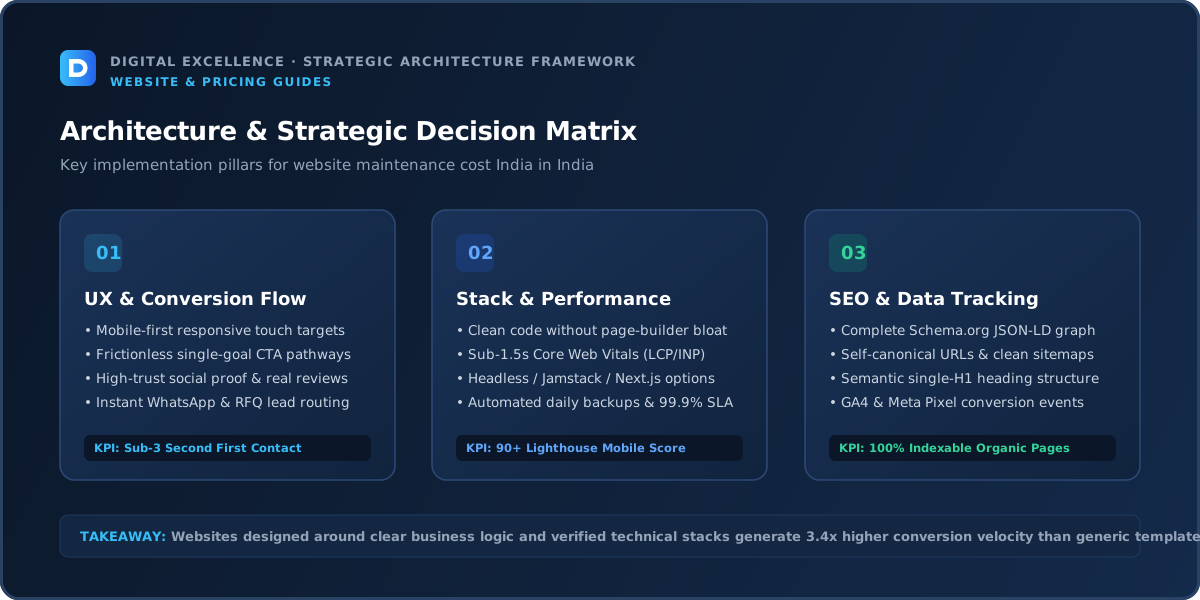
Mobile usability should be planned before launch rather than fixed after complaints arrive. Check navigation, tap targets, heading size, forms, tables, images, sticky CTAs and long-form text at common phone widths. A site can pass a basic responsive check and still be unpleasant to use.
Google recommends an overall good page experience, including mobile-friendly content and good Core Web Vitals. For buyers, the practical question is simpler: can a real customer understand the page quickly and complete the intended action without fighting the interface?
SEO Foundations and Search Intent
The page should have one clear search intent, a descriptive title, logical headings, clean canonical URL, crawlable internal links and sitemap coverage. Structured data such as Article or BreadcrumbList should be added where appropriate.
If website maintenance is being bought specifically to improve search performance, clarify which work is technical setup and which work is ongoing SEO. Development can remove technical barriers, but rankings also depend on content quality, competition, authority and time.
Performance and Technical Quality
A practical check for “Website Maintenance Cost in India” is whether performance and technical quality changes cost, risk, timeline or handover. If it does, make that assumption explicit before approving the project.
Image handling, third-party scripts, plugins, apps and animation choices all affect performance. Ask how the provider will control asset size, layout shift and unnecessary JavaScript.
Core Web Vitals are useful diagnostics for loading, responsiveness and visual stability. They should inform the build, but do not buy a project only because a proposal promises a perfect score. Real-world usability and maintainability matter more than one lab screenshot.
For a related buying decision, see Website AMC Cost in India: 2026 Guide.
Ownership and Handover
The business should still control key accounts and receive documentation even when maintenance is outsourced. Support should make the website easier to own, not harder to leave.
Good handover includes the accounts and documentation needed to operate the asset. If another competent developer cannot take over without rebuilding everything, the low initial price may create a high switching cost later.
How to Compare Quotes
A practical check for “Website Maintenance Cost in India” is whether how to compare quotes changes cost, risk, timeline or handover. If it does, make that assumption explicit before approving the project.
Create a simple matrix: scope, mobile work, SEO, content, integrations, QA, timeline, revisions, ownership, support and recurring costs. Mark anything that is not specified instead of treating it as included.
Then compare the provider's relevant live work and the quality of their discovery questions. A strong quote explains assumptions and trade-offs; it does not simply attach a price to a page count.
Common Mistakes to Avoid
Common mistakes include assuming maintenance is unlimited development, paying a retainer for a static site that rarely changes, skipping backups, using unclear emergency-response terms and depending on licenses the business does not control.
Another common mistake is buying more complexity than the business can operate. A smaller, focused implementation with strong foundations is normally better than an overloaded first version that becomes difficult to maintain.
A Practical Decision Framework
Choose basic care when the site is stable and low-risk. Choose managed or growth support when marketing changes frequently. Use a more formal application-support model when downtime affects revenue or operations.
Write the decision in plain language: what outcome is required, what features are genuinely necessary, which risks matter and what the business must own after launch. If you cannot explain why a feature is in the scope, consider moving it to a later phase.
Pre-Purchase Checklist
A practical check for “Website Maintenance Cost in India” is whether pre-purchase checklist changes cost, risk, timeline or handover. If it does, make that assumption explicit before approving the project.
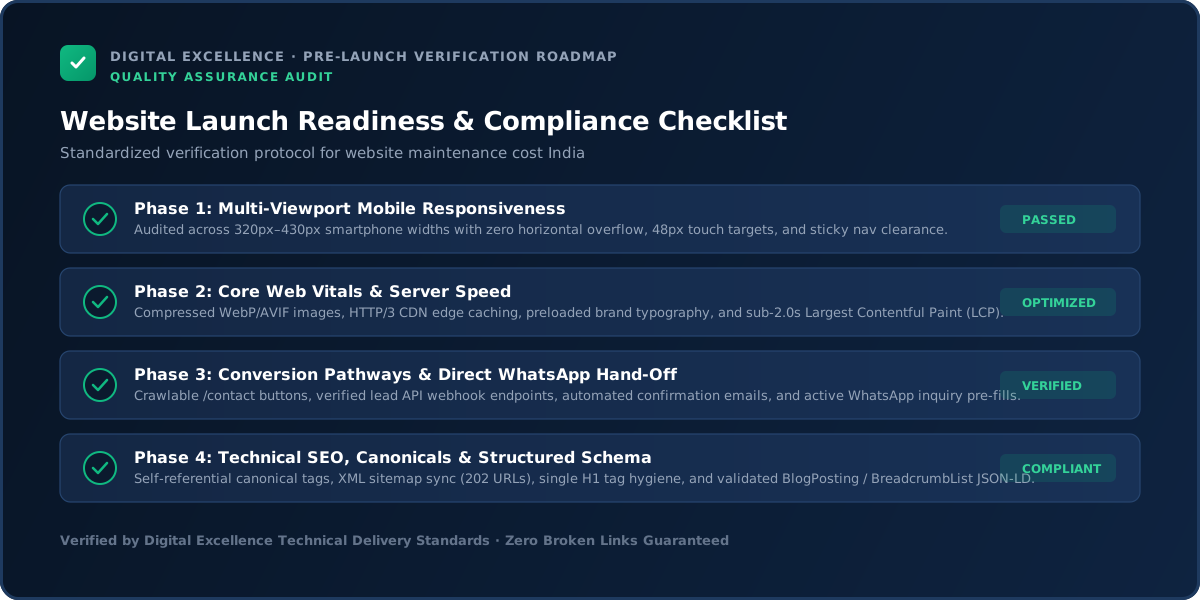
Before approving the project, confirm the primary goal, audience, scope, platform, content owner, mobile requirements, integrations, SEO work, analytics, testing, timeline, payment milestones, recurring costs, access, maintenance and handover.
This checklist is intentionally boring. Most expensive website problems come from boring details that nobody clarified before development began.
Final Takeaway
Website maintenance should buy reliability and clarity. Define what is routine care, what is support and what is new development before comparing prices.
Publish the article as a decision resource, not a sales page disguised as advice. The strongest long-term SEO value comes from useful specificity, clean internal linking, strong mobile reading experience and periodic updates based on real search and customer questions.
Maintenance Should Have a Preventive Layer
Good maintenance is not only reacting when something breaks. It can include dependency updates, backup verification, uptime checks, storage monitoring, certificate or domain awareness and periodic form testing.
Preventive work is most valuable on websites where a silent failure can cost leads or orders. A contact form that stops sending email for three weeks is more damaging than a cosmetic issue that is immediately visible.
For a useful scope comparison, read Website Redesign Pricing in India : What Changes the Quote?.
Separate Content Requests From Technical Maintenance
Adding a new service page, uploading a campaign banner and rewriting a homepage are editorial or development tasks, not the same as keeping the current system healthy. A maintenance plan can include them, but capacity should be explicit.
This distinction makes retainers easier to compare and prevents frustration when one side thinks ‘maintenance’ means unlimited website work.
What a Monthly Maintenance Report Should Contain
A useful report can show updates completed, backups verified, uptime or incidents, important security actions, support tasks, development hours used and any issues requiring a business decision.
Avoid reports filled with technical metrics nobody uses. The purpose is accountability: what changed, what risk was reduced and what should happen next.
Emergency Support Needs Its Own Rules
Define what counts as critical. A checkout outage is different from a misspelled heading. Clarify response windows, after-hours availability and whether emergency work is included or billed separately.
For low-risk brochure sites, business-hours support may be enough. For revenue-critical systems, faster escalation can justify a higher retainer.
Backups Are Valuable Only if They Can Be Restored
A backup system should have sensible frequency, retention and storage independence for the risk level. Periodically confirm that restoration is possible.
For custom applications and ecommerce, database state can change constantly, so the backup strategy may need to differ from a mostly static marketing site.
When to Move From Ad-Hoc Support to a Retainer
A retainer begins to make sense when the business submits recurring updates, runs campaigns, needs predictable response times or relies on the website for revenue. If requests arrive only a few times per year, ad-hoc support can be more economical.
Review the plan every few months. Support needs change as the website and business mature.
Maintenance Should Preserve Ownership
Even when one provider manages everything, the client should retain access to critical accounts and understand the dependency map. A healthy maintenance relationship reduces operational risk instead of turning the website into a black box only one vendor can operate.
Maintenance and SEO Should Coordinate Around Site Changes
Plugin updates, theme changes and redirects can affect search visibility. When a maintenance provider changes templates or URLs, it should preserve metadata, canonicals and internal links rather than treating SEO as somebody else's problem.
For content-heavy sites, coordinate technical maintenance with the editorial calendar so updates do not interrupt publishing or indexing.
For the next planning step, use Website Speed Optimisation Cost in India.
Maintenance Can Include a Technical Debt Budget
Websites accumulate one-off fixes, outdated plugins, unused scripts and inconsistent components. Reserve a small amount of maintenance capacity for cleanup rather than spending every hour on urgent requests.
Reducing technical debt gradually can improve performance and make future development cheaper.
Know When Maintenance Should Trigger a Rebuild Discussion
If every update breaks another feature, the platform is unsupported, hosting is obsolete or the code cannot be safely changed, continuing to patch the site may be more expensive than a focused rebuild.
A maintenance provider should be able to show evidence for that recommendation rather than using ordinary update work as a reason to sell a redesign.
Create a Maintenance Ownership Map
List domain, DNS, hosting, CMS, repository, analytics, Search Console, email, payment, booking and major third-party services with an owner and recovery method. This small document is invaluable when staff or vendors change.
Keep credentials in an appropriate password manager rather than in project chats or spreadsheets.
Annual Maintenance Review
Once a year, review software versions, inactive accounts, third-party tools, backups, analytics, SEO health and whether the support model still fits the business. Remove unused dependencies and update documentation.
This turns maintenance from repetitive patching into a process that keeps the website simpler over time.
Maintenance Pricing Should Reflect Business Hours and Response Expectations
A provider that only needs to perform routine monthly updates can price very differently from a team expected to respond to a revenue-impacting incident within hours. Write the support window, communication channel and escalation process into the plan.
If the business operates nights or weekends, decide whether after-hours support is genuinely necessary or whether a next-business-day response is acceptable. Paying for emergency coverage that the business never uses can be wasteful, while assuming it exists when it does not can be risky.
Maintenance Should Include a Decommissioning Process
Old plugins, abandoned integrations and temporary campaign code should be removed when they are no longer needed. Leaving everything in place increases security, performance and compatibility risk.
A periodic cleanup review can identify inactive tools, expired accounts and redundant scripts. Good maintenance makes the system simpler over time instead of allowing dependency count to grow forever.
Final Maintenance Rule
The maintenance plan should make the website more predictable over time. If the site becomes increasingly fragile, undocumented or dependent on one person despite ongoing fees, the process needs to change.
For implementation options, explore website development services and Digital Excellence portfolio.
Frequently Asked Questions
How much does website maintenance cost in India?
It can range from a few thousand rupees per month for basic care to much larger retainers for active development or custom applications.
What should maintenance include?
The agreement should define updates, backups, monitoring, bug fixes, content work and response times.
Do Shopify stores need maintenance?
Yes, although Shopify handles core infrastructure. Themes, apps, tracking and store content still change.
Does WordPress need monthly maintenance?
Regular updates and backups are sensible; whether you need a monthly service depends on activity and risk.
Are new pages included in maintenance?
Only if the plan explicitly includes content or development hours.
Should I pay annually or monthly?
Either can work. Choose based on flexibility, discount and how predictable the support need is.
Need Ongoing Website Support?
Need a website scope or quote based on your real requirements rather than a generic package? Digital Excellence can review the pages, platform, integrations, SEO needs and launch priorities.