What Should Be Included in a Website Development Proposal?

A website development proposal should make the project more predictable. If reading it creates more questions than answers, it is not doing its job. A useful proposal explains what is being built, how decisions will be made, what the client must provide, how changes are handled, what it costs and who owns the finished asset. This guide breaks down the sections business owners should expect before approving a website project.
Table of Contents
- Why This Decision Is More Important Than It Looks
- Objectives and Success Criteria
- Scope, Deliverables and Exclusions
- Mobile Quality Checklist
- SEO and Information Architecture
- Performance and Technical QA
- Ownership and Access
- Recurring Costs and Dependencies
- How to Compare Options
- Common Red Flags
- Pre-Decision Checklist
- What to Measure After Launch
- First 90 Days After Launch
- Final Takeaway
- The Proposal Should Describe the User Journey, Not Only Pages
- Content Responsibility Needs Its Own Section
- SEO Deliverables Should Be Concrete
- Analytics Should Identify the Events That Matter
- Migration Needs a Dedicated Workstream
- QA Should Explain What Will Be Tested
- Handover Is a Deliverable
- Change Control Protects Both Sides
- Final Proposal Test
- Add a Project Assumptions Section
- Define the Design Process
- Define the Development Environment and Launch Process
- Include Accessibility Expectations
- Include Performance Expectations Carefully
- Proposal Acceptance Should Trigger a Clean Kickoff
- Add a Communication and Reporting Section
- Add a Dependency and Risk Section
- Add a Definition of Done
- Include Post-Launch Monitoring
- Proposal Summary Should Be Easy to Understand
- Include a Content-Migration Table for Existing Sites
- Include a Launch Readiness Checklist
- Include a Support Escalation Path
- Final Proposal Principle
- Add a Responsibility Matrix for Larger Projects
- Final Buyer Check
- Final Proposal Standard
- Frequently Asked Questions
Proposal Section Checklist
| Section | Why it matters |
|---|---|
| Objective | aligns project with business goal |
| Scope | defines what is being built |
| Deliverables | makes output concrete |
| Timeline | exposes dependencies |
| Pricing | links money to milestones |
| Ownership | protects accounts/code/assets |
| Exclusions | prevents assumptions |
| Change control | handles new requests |
| Support | defines post-launch responsibility |
Why This Decision Is More Important Than It Looks
The proposal becomes the shared reference when memories differ. It does not need to be filled with legal language, but it should be specific enough that both sides can identify a completed deliverable and a new request.
Objectives and Success Criteria
The proposal should state why the website exists: qualified leads, ecommerce sales, bookings, content growth, brand credibility or a custom workflow. Success criteria do not need to promise outcomes outside the provider's control, but the team should know which user actions matter.
This focus helps prioritise scope when time or budget becomes constrained.
Scope, Deliverables and Exclusions
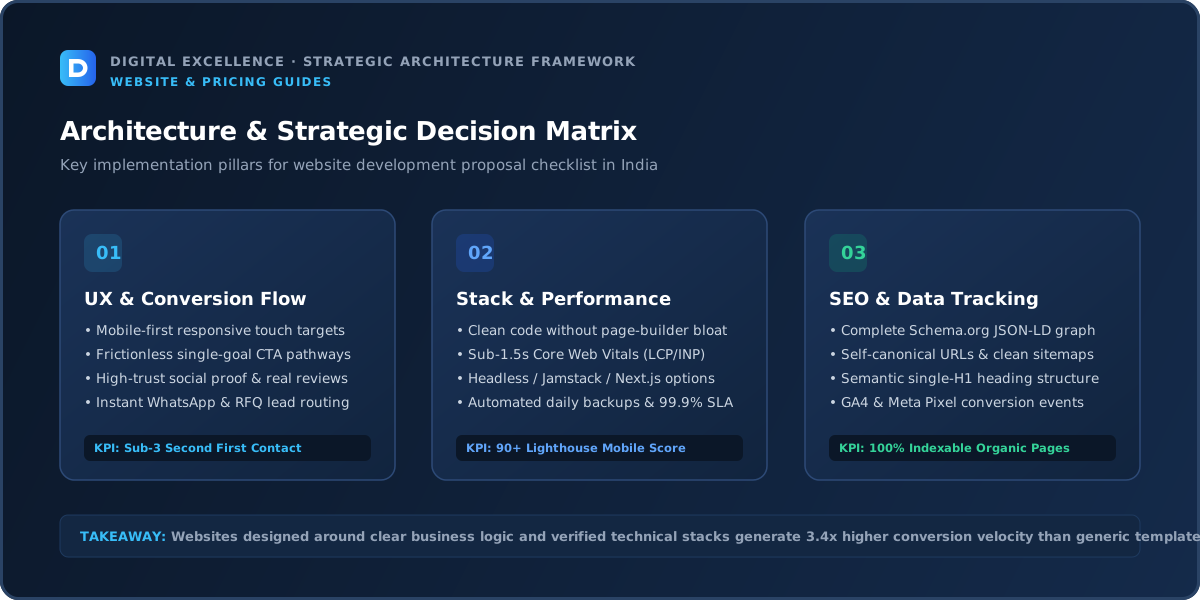
List pages or templates, functionality, integrations, content, design deliverables, CMS, analytics and SEO work. Then list what is excluded: photography, copy, product uploads beyond a limit, paid apps or ongoing SEO, for example.
Exclusions are not negative. They make the quote more honest.
Mobile Quality Checklist
For “What Should Be Included in a Website Development Proposal?”, use mobile quality checklist to compare the real scope, responsibility and long-term ownership behind each proposal instead of treating it as a standard line item.
Review the project on real mobile widths, not only a desktop browser. Check navigation, heading size, forms, tables, images, sticky elements and the primary conversion path. The site should remain readable without forcing the user to zoom or dismiss intrusive overlays.
For long-form SEO pages, typography matters too. A developer who can make a 2,000-word buying guide comfortable on a phone is solving a different problem from someone who only creates impressive hero sections.
SEO and Information Architecture
For “What Should Be Included in a Website Development Proposal?”, use seo and information architecture to compare the real scope, responsibility and long-term ownership behind each proposal instead of treating it as a standard line item.
Important pages should have a clear purpose, descriptive URLs, one H1, unique titles and meta descriptions, self-canonicals, sitemap coverage and contextual internal links. Google recommends crawlable links with meaningful anchor text so users and search engines can discover related pages.
If an existing site is being changed, redirects and migration planning must be part of the scope. Technical SEO should be visible in the implementation checklist rather than implied by the word “SEO-friendly.”
Performance and Technical QA
For “What Should Be Included in a Website Development Proposal?”, use performance and technical qa to compare the real scope, responsibility and long-term ownership behind each proposal instead of treating it as a standard line item.
Before launch, test the primary templates for loading, interaction and visual stability. Google recommends good Core Web Vitals as part of an overall good page experience. Performance work should focus on real bottlenecks such as media, fonts, scripts, plugins or apps.
QA should also include forms, validation, error states, analytics events, links and the critical user journeys. A fast page with a broken contact form is not a successful launch.
Ownership and Access
The proposal should clarify domain, hosting/deployment, CMS, source code, designs, third-party licenses and analytics ownership or access. Custom intellectual-property terms belong in the contract, but the proposal can summarise the operational model.
Recurring Costs and Dependencies
Show one-time fees, taxes if applicable, third-party subscriptions and ongoing support separately. Payment milestones should correspond to meaningful project stages.
How to Compare Options
Use the proposal as the comparison baseline. If two vendors organise scope differently, map both into the same rows and mark unknowns.
Common Red Flags
Red flags include unclear scope, no exclusions, no change process, guaranteed business outcomes, hidden recurring subscriptions, no handover language and payment schedules disconnected from deliverables.
For a related buying decision, see How to Compare Website Development Quotes: 2026 Buyer Checklist.
Pre-Decision Checklist
For “What Should Be Included in a Website Development Proposal?”, use pre-decision checklist to compare the real scope, responsibility and long-term ownership behind each proposal instead of treating it as a standard line item.
Write down the project goal, required pages or workflows, platform, content owner, integrations, SEO scope, analytics, migration needs, mobile requirements, revisions, timeline, payment milestones, account ownership, handover and support.
Mark anything not specified as unknown. Unknowns are where budget surprises and disputes usually appear.
What to Measure After Launch
Include analytics and conversion setup in the proposal when measurement matters. Define the events—form submissions, bookings, purchases or other actions—that should be verified at launch.
First 90 Days After Launch
For “What Should Be Included in a Website Development Proposal?”, use first 90 days after launch to compare the real scope, responsibility and long-term ownership behind each proposal instead of treating it as a standard line item.
Monitor technical errors, analytics, Search Console, form or ecommerce events and real user feedback. Fix high-impact issues before adding decorative features.
Use actual queries and conversion data to improve content and internal links. The first version should be a strong foundation for iteration, not a frozen asset that cannot change.
Final Takeaway
A good proposal turns a website idea into a shared, testable scope. Specificity protects both the buyer and the provider.
The page should help a buyer make a better decision even if they never become a client. That is the standard for durable SEO content: useful detail, honest limitations, clean structure, contextual links and an excellent mobile reading experience.
The Proposal Should Describe the User Journey, Not Only Pages
A page list does not explain how a visitor discovers a service, evaluates proof and completes an enquiry. A strong proposal can summarise the primary user journeys and which pages or features support them.
This makes design and analytics decisions easier later because the team understands why each template exists.
Content Responsibility Needs Its Own Section
State who writes, edits, approves and uploads copy; who supplies images; whether product data is included; and what happens when content arrives late. Content is one of the most common causes of website delays.
If the provider includes copywriting, clarify research, revision and subject-matter review. If the client supplies copy, define format and deadlines.
SEO Deliverables Should Be Concrete
Instead of ‘SEO-friendly website,’ list what will be implemented: metadata support, canonical URLs, sitemap, robots, headings, crawlable internal links, redirects and structured data where appropriate.
If keyword research, content strategy or ongoing SEO is included, describe those separately. This prevents launch hygiene from being mistaken for a complete organic-growth campaign.
Analytics Should Identify the Events That Matter
The proposal should specify which tools are connected and which conversions are tested: forms, bookings, purchases, phone or WhatsApp clicks when relevant.
Implementation is not complete merely because a tracking script exists. Include production validation and account ownership.
Migration Needs a Dedicated Workstream
For an existing site, the proposal should cover content/data migration, redirect mapping, analytics continuity, DNS/hosting changes and launch verification. The complexity depends on the current platform and traffic.
Do not hide migration inside one generic ‘website setup’ line when the old site has valuable search visibility or business data.
QA Should Explain What Will Be Tested
List representative browsers, responsive states, forms, ecommerce flows, integrations, broken links, metadata, redirects and content review. The exact checklist should match project risk.
A proposal that includes QA but never defines it makes it difficult to judge launch readiness.
For a useful scope comparison, read Website Development Contract Checklist for Business Owners.
Handover Is a Deliverable
Specify administrator access, code/repository access where applicable, domain/hosting information, third-party services, basic documentation and training. The client should know what they will receive after final payment.
This also makes future vendor changes less risky.
Change Control Protects Both Sides
The proposal should explain how additions are estimated and approved. This does not make the relationship inflexible; it prevents ordinary feedback from being confused with a new feature.
A simple written change process keeps timeline and budget discussions objective.
Final Proposal Test
A business owner should be able to hand the proposal to another competent developer and have them understand what is being built, what is excluded and how completion will be judged. If too much depends on verbal context, the document needs more specificity.
Add a Project Assumptions Section
State assumptions about content readiness, number of stakeholders, product count, languages, existing data, third-party access and decision speed. These assumptions explain why the quoted price and timeline are reasonable.
When an assumption changes, both sides can see why scope or schedule may need adjustment.
Define the Design Process
The proposal should explain whether the project uses references, wireframes, a custom UI phase, an existing theme or a component system. State which representative pages are designed first and how approval works.
This prevents ‘custom design’ from meaning different things to the buyer and the provider.
Define the Development Environment and Launch Process
For larger projects, explain staging or preview environments, production deployment, DNS responsibilities, migration/cutover and rollback planning. Small sites can use a lighter version of this process.
The proposal should make clear who has to provide domain or hosting access and when.
Include Accessibility Expectations
Define basic requirements such as semantic structure, keyboard usability, form labels, alt text and readable contrast. Specific legal compliance requirements should be scoped separately when relevant.
Accessibility is easier to build into the system than to bolt on after visual approval.
Include Performance Expectations Carefully
Rather than promising an absolute score, describe optimisation work: responsive images, font handling, script discipline, code splitting or caching appropriate to the platform, plus testing of important templates.
This creates an actionable scope without guaranteeing metrics influenced by third-party tools or user conditions.
Proposal Acceptance Should Trigger a Clean Kickoff
Once the proposal is approved, both sides should know the next steps: deposit, kickoff meeting, content/access checklist, first milestone and communication channel.
A strong proposal does not end at ‘sign here’; it transitions naturally into delivery.
Add a Communication and Reporting Section
State the primary channel, meeting rhythm, who sends status updates and how blockers are escalated. Projects slow down when feedback is split between email, WhatsApp, calls and several stakeholders.
A simple communication rule can save significant coordination time.
For the next planning step, use Website Development Timeline: Project-by-Project Guide.
Add a Dependency and Risk Section
List external approvals, integrations, content, domain access or data migrations that can affect timeline. Note which risks are known and which require discovery.
This makes the proposal more credible than a schedule that assumes every dependency will be perfect.
Add a Definition of Done
For each major deliverable, describe what completion means: responsive templates implemented, forms tested, content loaded, analytics verified, redirects working and production deployed, for example.
A definition of done makes final acceptance far less subjective.
Include Post-Launch Monitoring
Specify whether the provider will monitor production after launch, for how long and which issues are covered. Production-only errors, analytics problems and DNS/configuration issues can appear after deployment.
A short monitoring period can be more useful than adding another launch-day feature.
Proposal Summary Should Be Easy to Understand
Finish with a one-page commercial summary: objective, core scope, timeline, price, payment schedule, major exclusions and ongoing costs. Decision-makers should not have to interpret 30 pages of presentation material to understand the deal.
Include a Content-Migration Table for Existing Sites
List content types, approximate volume, source system, migration method and who validates each type. Pages, blog posts, products, media, redirects and user records may require different methods.
This prevents ‘migration included’ from hiding significant manual work or data assumptions.
Include a Launch Readiness Checklist
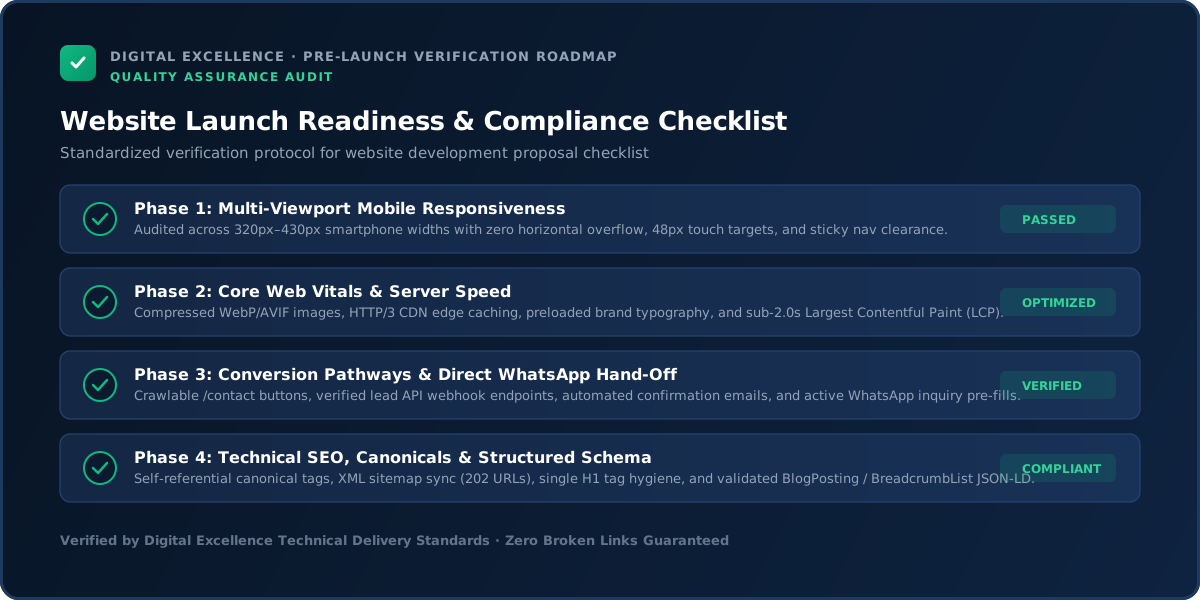
Before launch, the proposal can identify required approvals, content completion, integrations, DNS access, analytics, redirects, backups and final QA. This converts launch from a vague milestone into a set of verifiable conditions.
The checklist also makes client-side dependencies visible.
Include a Support Escalation Path
If the site is important to revenue or operations, the proposal should state how issues are reported, who triages them and what happens outside normal hours if such coverage is included.
This is more meaningful than simply writing ‘support available.’
Final Proposal Principle
A strong proposal reduces future arguments because assumptions are visible before work starts. It should be specific enough to guide delivery but flexible enough to handle clearly approved changes without rewriting the entire agreement.
Add a Responsibility Matrix for Larger Projects
For complex builds, identify who is responsible, accountable, consulted and informed for content, design approval, DNS, integrations, analytics, legal review and launch. A lightweight RACI-style matrix can prevent tasks from falling between teams.
The proposal does not need corporate bureaucracy, but responsibility should be visible when several people or vendors are involved.
Final Buyer Check
If the proposal does not explain scope, assumptions, handover and what happens after launch, ask for those sections before approval. A short clear proposal is better than a long presentation that avoids operational detail.
Final Proposal Standard
The proposal should be detailed enough that another competent professional could understand the intended website without joining the original sales conversation. That standard keeps delivery, pricing and acceptance grounded in the same written scope.
For implementation options, explore website development services and Digital Excellence portfolio.
Frequently Asked Questions
Is a proposal the same as a contract?
No. A proposal describes the solution and commercial scope; the contract contains binding legal terms.
Should the proposal list every page?
It should at least define templates, key pages and the method for handling repeated content.
Should SEO be included?
If SEO work is part of the project, the exact tasks should be described.
What should exclusions cover?
Anything the buyer may reasonably assume is included but is not.
How should revisions be written?
Define stages, limits or process and distinguish revisions from new scope.
Should maintenance be in the same proposal?
It can be included as an optional or recurring section with clear scope.
Need a Clear Website Scope of Work?
Need a website scope or quote based on your real requirements rather than a generic package? Digital Excellence can review the pages, platform, integrations, SEO needs and launch priorities.