Website Development Contract Checklist for Business Owners

A website contract is not only for resolving worst-case disputes. Its most useful function is preventing ordinary misunderstandings: when a payment is due, who provides content, who owns the domain, what counts as a revision and what happens when the scope changes. This is a commercial checklist, not legal advice. For material legal risk, intellectual-property disputes or complex corporate procurement, have a qualified lawyer review the agreement.
Table of Contents
- Why This Decision Is More Important Than It Looks
- Scope and Acceptance
- Payments and Milestones
- Mobile Quality Checklist
- SEO and Information Architecture
- Performance and Technical QA
- Ownership and Access
- Recurring Costs and Dependencies
- How to Compare Options
- Common Red Flags
- Pre-Decision Checklist
- What to Measure After Launch
- First 90 Days After Launch
- Final Takeaway
- A Contract Should Reference a Versioned Scope
- Client Responsibilities Matter Too
- Intellectual Property Is More Than Source Code
- Confidentiality and Data Access Should Match the Project
- Termination Terms Should Describe the Practical Exit
- Warranty and Support Are Different Concepts
- Use Limitation and Liability Clauses With Legal Advice
- Third-Party Outages and Platform Changes Need Realistic Treatment
- Final Contract Rule
- Payment Terms Should Address Pauses
- Use Change Orders for Material Scope Changes
- Clarify Third-Party Terms
- Data Protection Responsibilities Depend on the Project
- Public Portfolio Rights Should Be Explicit
- Electronic Access Should Be Revoked at Project End
- Source Materials Should Be Licensed Correctly
- Open-Source Software Still Has Licenses
- Acceptance Silence Should Be Reasonable
- Dispute Resolution Should Match the Project Size
- Keep the Contract and Actual Working Practice Aligned
- Keep a Contract Summary for the Project Team
- Do Not Copy a Foreign Contract Without Reviewing Jurisdiction
- Keep Evidence of Approvals
- Final Contract Principle
- One Final Contract Check
- Final Buyer Check
- Final Contract Standard
- Frequently Asked Questions
Contract Clause Checklist
| Clause | Question to answer |
|---|---|
| Scope | what exactly is included? |
| Payment | when is each amount due? |
| Changes | how are additions approved? |
| IP | who owns custom work? |
| Third parties | who pays/owns licenses? |
| Access | who controls accounts? |
| Termination | what happens if project stops? |
| Handover | what must be delivered? |
| Support | what happens after launch? |
Why This Decision Is More Important Than It Looks
A contract makes routine scenarios predictable. Without written terms, both parties may have reasonable but different assumptions about revisions, ownership or delays. The purpose is clarity, not hostility.
Scope and Acceptance
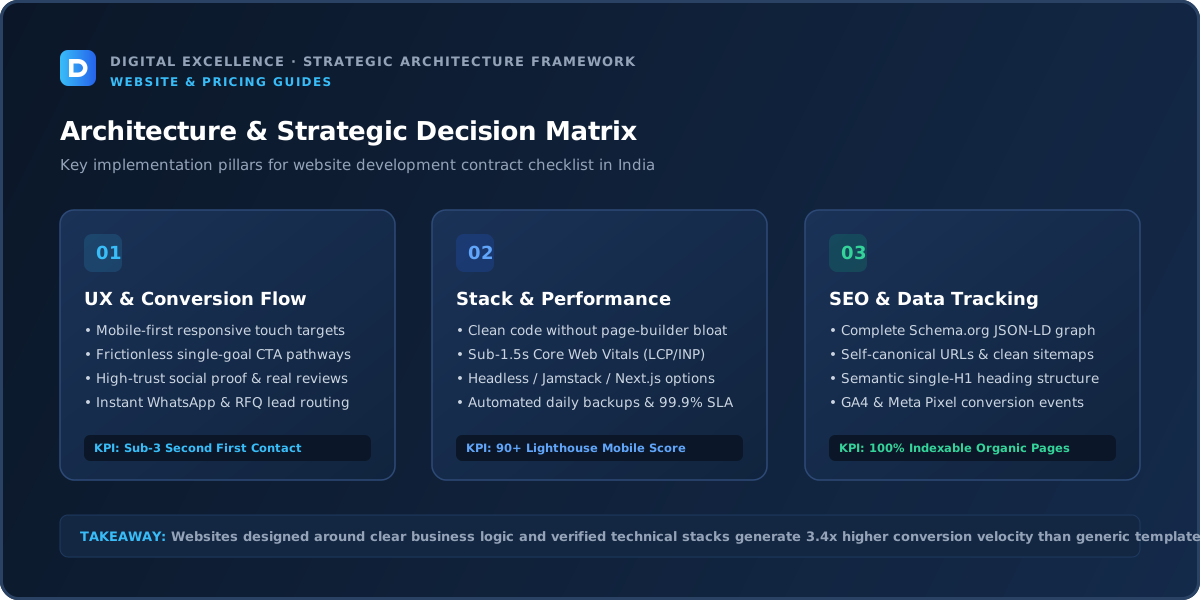
The agreement should reference the approved scope and explain how deliverables are accepted. If acceptance is based on feedback within a certain period, understand that process.
Avoid using the contract itself as the only technical specification. Link it to a proposal or scope document that can describe pages, integrations and requirements more clearly.
Payments and Milestones
Milestone payments should have objective triggers such as design approval, development completion or production launch. Clarify deposits, taxes, late payments and what happens if the project is paused.
Do not assume full payment automatically transfers every third-party license or intellectual-property right; those terms should be explicit.
Mobile Quality Checklist
When evaluating “website development contract checklist”, this mobile quality checklist point should be tied to a written deliverable, owner or test so two quotes can be compared on the same basis.
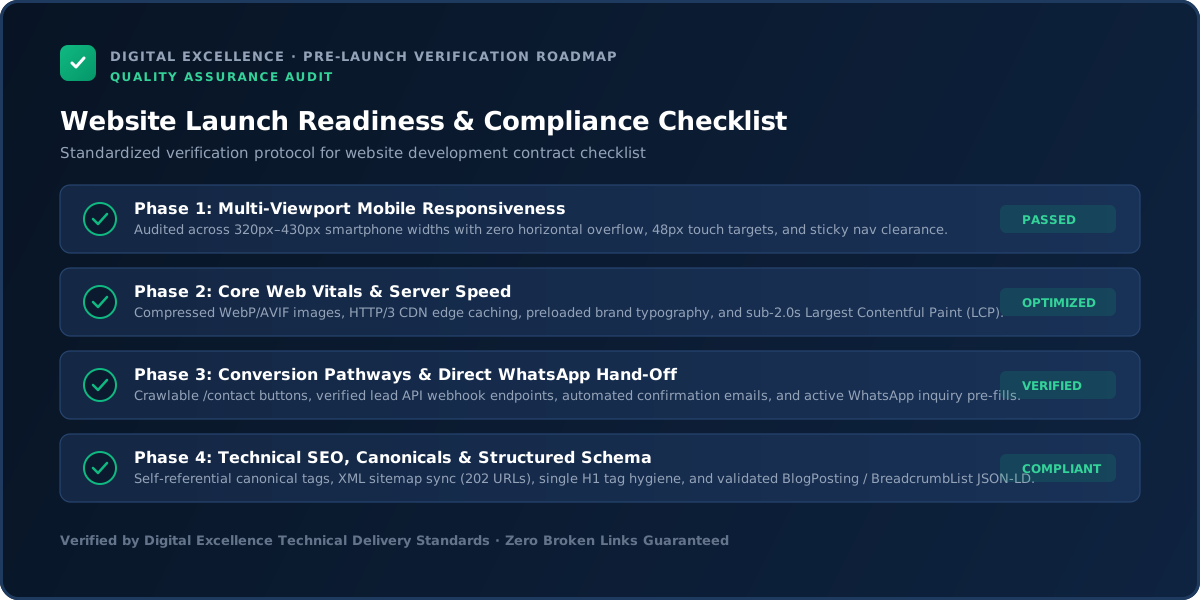
Review the project on real mobile widths, not only a desktop browser. Check navigation, heading size, forms, tables, images, sticky elements and the primary conversion path. The site should remain readable without forcing the user to zoom or dismiss intrusive overlays.
For long-form SEO pages, typography matters too. A developer who can make a 2,000-word buying guide comfortable on a phone is solving a different problem from someone who only creates impressive hero sections.
SEO and Information Architecture
When evaluating “website development contract checklist”, this seo and information architecture point should be tied to a written deliverable, owner or test so two quotes can be compared on the same basis.
Important pages should have a clear purpose, descriptive URLs, one H1, unique titles and meta descriptions, self-canonicals, sitemap coverage and contextual internal links. Google recommends crawlable links with meaningful anchor text so users and search engines can discover related pages.
If an existing site is being changed, redirects and migration planning must be part of the scope. Technical SEO should be visible in the implementation checklist rather than implied by the word “SEO-friendly.”
Performance and Technical QA
When evaluating “website development contract checklist”, this performance and technical qa point should be tied to a written deliverable, owner or test so two quotes can be compared on the same basis.
Before launch, test the primary templates for loading, interaction and visual stability. Google recommends good Core Web Vitals as part of an overall good page experience. Performance work should focus on real bottlenecks such as media, fonts, scripts, plugins or apps.
QA should also include forms, validation, error states, analytics events, links and the critical user journeys. A fast page with a broken contact form is not a successful launch.
Ownership and Access
Review ownership of custom code, designs, copy, domain, hosting, CMS, analytics and data. Third-party themes, fonts, plugins and libraries may remain subject to their own licenses.
Recurring Costs and Dependencies
The agreement should identify third-party services that are outside the project fee and whether renewals are the client's responsibility. This is particularly important for Shopify apps, premium WordPress plugins, cloud services and paid media tools.
How to Compare Options
When comparing contracts, focus on how clearly each one handles ordinary project changes, account ownership and exit. A shorter contract can be excellent if the scope and rights are clear; length is not quality.
For a related buying decision, see Website Development Proposal Checklist: What Should Be Included?.
Common Red Flags
Red flags include the vendor owning the client's domain without transfer rights, broad rights to client confidential data, unclear IP, undefined cancellation terms and payment obligations not tied to any deliverable.
Pre-Decision Checklist
When evaluating “website development contract checklist”, this pre-decision checklist point should be tied to a written deliverable, owner or test so two quotes can be compared on the same basis.
Write down the project goal, required pages or workflows, platform, content owner, integrations, SEO scope, analytics, migration needs, mobile requirements, revisions, timeline, payment milestones, account ownership, handover and support.
Mark anything not specified as unknown. Unknowns are where budget surprises and disputes usually appear.
What to Measure After Launch
The contract does not need to guarantee business results. If analytics setup is part of scope, it can require implementation and testing of specified events rather than promising a number of leads or sales.
First 90 Days After Launch
When evaluating “website development contract checklist”, this first 90 days after launch point should be tied to a written deliverable, owner or test so two quotes can be compared on the same basis.
Monitor technical errors, analytics, Search Console, form or ecommerce events and real user feedback. Fix high-impact issues before adding decorative features.
Use actual queries and conversion data to improve content and internal links. The first version should be a strong foundation for iteration, not a frozen asset that cannot change.
Final Takeaway
The best website contract removes ambiguity from normal situations: scope changes, payments, ownership, delays, handover and support. Get legal review when the stakes justify it.
The page should help a buyer make a better decision even if they never become a client. That is the standard for durable SEO content: useful detail, honest limitations, clean structure, contextual links and an excellent mobile reading experience.
A Contract Should Reference a Versioned Scope
The legal agreement can stay concise if it references an approved proposal or statement of work with a clear version/date. When scope changes, update the referenced document or record the approved change.
This prevents a dispute where both parties are technically referring to ‘the proposal’ but have different drafts.
Client Responsibilities Matter Too
Contracts can state when the client must provide content, approvals, product data, access credentials or third-party accounts. If those inputs are delayed, the project schedule may need to move.
Clear client responsibilities make timeline commitments more realistic and reduce blame when development is waiting on decisions.
Intellectual Property Is More Than Source Code
The project may include custom code, design files, copy, fonts, stock imagery, themes, plugins and open-source libraries. These assets can have different ownership and license terms.
Ask which deliverables transfer to the client and which remain subject to third-party licenses. For high-value projects, have qualified counsel review ambiguous IP language.
Confidentiality and Data Access Should Match the Project
A developer may see customer data, analytics, business plans, API keys or internal systems. Define confidentiality obligations and limit access to what is required.
Security is improved when accounts use individual permissions rather than shared passwords and when access is revoked after the work ends.
Termination Terms Should Describe the Practical Exit
If either side ends the project, the agreement should explain payment for completed work, what unfinished assets are delivered, how access is returned and what happens to third-party subscriptions.
A clear exit process reduces the leverage created by uncertainty.
For a useful scope comparison, read How to Compare Website Development Quotes: 2026 Buyer Checklist.
Warranty and Support Are Different Concepts
A warranty period may cover defects in agreed functionality; ongoing support may include updates, content changes or new features. Keep these definitions separate so neither side assumes unlimited post-launch work.
The contract can reference a maintenance plan if support continues after launch.
Use Limitation and Liability Clauses With Legal Advice
Website agreements may include limitations of liability, indemnities or dispute-resolution terms. These provisions can have significant legal consequences and should be reviewed in the context of jurisdiction and business risk.
A project checklist can highlight the topic, but it cannot replace advice from a qualified lawyer.
Third-Party Outages and Platform Changes Need Realistic Treatment
Developers cannot guarantee uninterrupted operation of hosting providers, payment gateways, Shopify, plugins or external APIs. The contract should distinguish the provider's own work from dependencies outside its direct control.
What matters operationally is how the team responds when a dependency fails.
Final Contract Rule
A good contract makes normal situations predictable: scope changes, late content, milestone approval, ownership, termination and post-launch defects. It should reduce uncertainty, not rely on aggressive language that nobody understands.
Payment Terms Should Address Pauses
Projects can pause because of client approvals, vendor capacity, illness or external dependencies. The agreement should explain how long a pause can last, whether the schedule is rebooked and how completed milestones are invoiced.
This prevents an old project from unexpectedly reclaiming priority months later.
Use Change Orders for Material Scope Changes
A simple change record can identify the new requirement, impact on time/cost and approval. This creates a shared history and avoids verbal additions being forgotten.
Not every small edit needs paperwork; reserve the process for changes that materially affect scope.
Clarify Third-Party Terms
Payment gateways, SaaS platforms, fonts, plugins, themes and APIs have their own terms and can change independently. The developer may configure them but cannot override their policies.
The contract should make these dependencies visible and identify who pays renewal or usage fees.
Data Protection Responsibilities Depend on the Project
If the website collects personal or sensitive data, clarify which party configures forms, storage, access and retention. Regulatory obligations vary by jurisdiction and data type, so obtain appropriate legal guidance when necessary.
The developer should not be expected to invent compliance policy without business or legal input.
Public Portfolio Rights Should Be Explicit
Agencies and freelancers often want to show completed work in a portfolio. The agreement can state whether they may use the client name, screenshots or project description and whether confidential work is excluded.
This avoids a later disagreement about publicity.
Electronic Access Should Be Revoked at Project End
When the engagement ends, review developer access to hosting, CMS, analytics, repositories and third-party tools. Remove unnecessary accounts and rotate credentials where appropriate.
A clean access closeout is part of professional handover.
For the next planning step, use Website Development Timeline: Project-by-Project Guide.
Source Materials Should Be Licensed Correctly
Clarify who is responsible for rights to logos, photos, videos, fonts, stock media and copy supplied for the website. A developer cannot verify every asset the client provides.
Keep proof of licenses for paid assets where applicable.
Open-Source Software Still Has Licenses
WordPress, libraries and frameworks may be open source but remain subject to license terms. Custom contracts should not promise exclusive ownership of third-party open-source components.
For complex software, legal review can help distinguish custom IP from dependencies.
Acceptance Silence Should Be Reasonable
Some contracts treat a deliverable as accepted if the client does not respond within a specified period. If such a clause exists, make sure the review window is practical and the deliverable is clearly provided for review.
Operational convenience should not remove a genuine opportunity to test the work.
Dispute Resolution Should Match the Project Size
Small website projects may not justify elaborate procedures, while large software engagements may need governing-law, venue, mediation or arbitration provisions. These choices have legal consequences.
Use qualified legal advice instead of copying clauses from an unrelated template.
Keep the Contract and Actual Working Practice Aligned
If the team later changes payment, scope or delivery model, record the change. A contract nobody follows creates false confidence.
The best protection is a clear agreement supported by consistent written project records.
Keep a Contract Summary for the Project Team
Even when the legal agreement is long, create a short operational summary of scope, milestones, feedback windows, ownership and change process for the people doing the work.
This reduces accidental breaches caused by team members who never read the full legal document.
Do Not Copy a Foreign Contract Without Reviewing Jurisdiction
Templates from another country may refer to laws, tax rules, dispute mechanisms or privacy obligations that do not fit the actual parties. Use local legal advice when the stakes are meaningful.
A contract is useful only when its terms are relevant and enforceable in the intended context.
Keep Evidence of Approvals
Save approvals for designs, scope changes, launch and major deliverables in a durable project record. This does not require formal signatures for every decision; clear written confirmation can prevent later confusion.
The goal is a shared history of what changed and why.
Final Contract Principle
A website agreement should make ordinary project situations boring and predictable. If every delay, revision or handover question becomes a negotiation, the contract and scope were not clear enough.
One Final Contract Check
Before signing, compare the contract with the commercial proposal and actual project conversation. Make sure the documents agree on price, scope, timeline, ownership, support and cancellation. If they conflict, clarify the final controlling terms in writing rather than assuming everyone shares the same interpretation.
Final Buyer Check
A contract should make ownership, payments, changes and exit predictable enough that normal project events do not become disputes.
Final Contract Standard
The agreement should reduce uncertainty.
For implementation options, explore website development services and Digital Excellence portfolio.
Frequently Asked Questions
Is this legal advice?
No. This is a project-management checklist; use a qualified lawyer for legal advice.
Who should own the domain?
The business should normally control it or have clear contractual transfer rights.
Who owns website code?
It depends on the agreement and third-party licenses. Make ownership explicit.
What is a change request?
A request that adds or materially changes approved scope, usually with a time/cost impact.
Should the contract guarantee rankings or sales?
Those outcomes depend on factors outside a developer's control and should not be treated as guaranteed development deliverables.
What happens if the project is cancelled?
The agreement should describe payments, work completed, asset handover and licenses.
Need the Technical Scope Clarified Before Contracting?
Need a website scope or quote based on your real requirements rather than a generic package? Digital Excellence can review the pages, platform, integrations, SEO needs and launch priorities.