Website Development Packages in India: What Should Be Included?

Website development packages make buying easier because they turn a complicated service into a simple list: five pages, responsive design, domain, hosting, SEO and support. The problem is that the same words can hide very different levels of work. “SEO included” might mean an SEO plugin was installed, or it might include keyword mapping, metadata, sitemap, canonicals and internal linking. “Unlimited revisions” may apply only before development. “Free hosting” may be shared hosting under the vendor's account. “Custom design” may mean changing colours on a template. A package can be useful, especially for a standard small-business website, but only when each promise is defined. This guide shows what to inspect before comparing website development packages in India.
Table of Contents
- Why Website Packages Can Be Misleading
- Pages vs Unique Templates
- What “Custom Design” Should Mean
- What “SEO Included” Should Mean
- Domain and Hosting: Free Does Not Mean Ownerless
- Content and Image Responsibilities
- Revision Terms
- Maintenance and Support
- Analytics and Tracking
- A Better Way to Compare Website Packages
- Which Package Is Right for a Small Business?
- Final Takeaway
- What a Mobile-Friendly Package Should Explicitly Cover
- What Performance Work Should Be Included
- How Blog and SEO Infrastructure Should Be Packaged
- What an Ecommerce Package Needs Beyond Product Uploads
- How to Spot a Package Designed for Upsells
- A Recommended Package Comparison Template
- Package Pricing Should Show the Assumptions Behind the Price
- How to Compare a ₹30,000 Package With a ₹75,000 Package
- What ‘Free Domain and Hosting’ Should Trigger You to Ask
- Unlimited Revisions Need a Process
- Satisfaction Guarantees Should Be Read Carefully
- Package Checklist for SEO-Led Businesses
- Before You Buy Any Website Package
- Final Package Comparison Rule
- Frequently Asked Questions
Buyer Comparison
| Package item | What to clarify |
|---|---|
| Pages | number of unique templates vs repeated pages |
| Design | template customisation or custom UI |
| Mobile | responsive only or mobile-specific optimisation |
| SEO | exact on-page/technical tasks |
| Content | client-supplied, edited or written |
| Hosting | provider, plan, owner, renewal price |
| Revisions | stage, limits and definition |
| Support | duration and what support covers |
| Ownership | domain, CMS, code and account access |
Why Website Packages Can Be Misleading
Packages encourage apples-to-oranges comparisons. A ₹20,000 “10-page package” may include ten copies of the same template. A ₹60,000 five-page package may include five custom layouts, strategy and copy support.
The page count is easy to advertise, but it does not describe the design or engineering effort.
Use a package as a starting point. Ask the vendor to translate every bullet into a concrete deliverable before you compare it with another quote.
Pages vs Unique Templates
A page is a URL. A template is a layout and content model. A website can have 100 location pages generated from one template, while a five-page brand site can require five unique designs.
Ask how many unique page templates are included and what content can be managed dynamically.
This distinction matters for both price and future scalability.
What “Custom Design” Should Mean
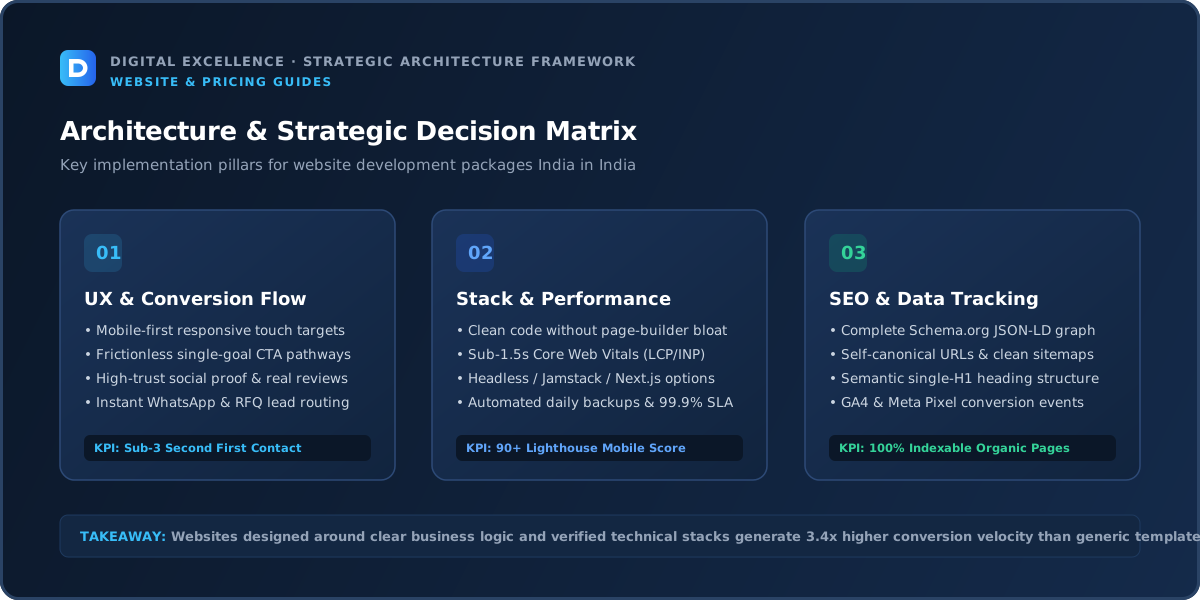
Ask whether the package starts from a pre-built theme, a component library, a custom Figma design or a fully custom theme.
There is nothing wrong with template customisation when the budget and goals fit. The problem is calling every colour change “custom.”
A package should explain the design process, number of concepts or review stages and whether mobile states are intentionally designed.
What “SEO Included” Should Mean
At minimum, ask about title tags, meta descriptions, heading structure, clean URLs, canonical tags, sitemap, robots, image alt text and crawlable internal links.
For local businesses, Google Business Profile work is a separate activity. For competitive organic growth, keyword research, content and authority-building may be ongoing.
Avoid packages that imply installing one plugin guarantees rankings.
Domain and Hosting: Free Does Not Mean Ownerless
A package may include a domain or hosting for the first year. Clarify whose account the domain is registered in, what hosting plan is used and what renewals cost.
You should know how to transfer the site if you change providers.
Hosting convenience is valuable; dependency without transfer terms is not.
Content and Image Responsibilities
Does the package include copywriting or only content upload? How many product descriptions? Who sources images? Are paid stock assets included?
Missing content can delay the project even when development is finished.
A good package sets a clear content workflow rather than assuming the client will somehow produce everything by launch.
Revision Terms
“Unlimited revisions” needs a definition. Normal design feedback is different from changing the entire business positioning after approval or adding a new booking system.
Ask which stages allow revisions and what counts as new scope.
Clear boundaries protect the client too: they keep the provider from labelling ordinary corrections as chargeable extras.
For a related buying decision, see Website Developer Cost in India : Pricing Guide.
Maintenance and Support
A package that says “one year maintenance” should explain what maintenance includes. Security updates and backups are different from new pages, redesign requests and feature development.
Ask response times, communication channel and whether the support covers third-party issues.
If the website drives sales or leads, support quality can matter more than one extra launch feature.
Analytics and Tracking
Basic analytics setup should clarify which tools are connected and which conversions are tracked. A lead-generation site may need form, phone, WhatsApp or booking events. Ecommerce needs purchase tracking.
Do not assume “Google Analytics included” means tracking has been tested.
The package should identify who owns the analytics account and how handover works.
A Better Way to Compare Website Packages
Create a matrix with columns for each vendor and rows for design, templates, mobile, CMS, copy, SEO, analytics, hosting, integrations, revisions, QA, support and ownership.
Mark unknown items explicitly instead of assuming they are included.
Then compare the total first-year cost and ongoing annual cost. Free first-year extras can become expensive renewals.
Which Package Is Right for a Small Business?
A small business usually needs credibility, clear services, proof and an easy contact path. A package with a manageable CMS, mobile-first design and good SEO foundations is often more valuable than one with dozens of decorative features.
If organic search is important, prioritise service-page architecture and content. If paid ads are important, prioritise landing-page UX and conversion tracking.
Choose the package that supports the acquisition channel you actually plan to use.
Final Takeaway
A practical check for “Website Development Packages in India: What Should Be Included?” is whether final takeaway changes cost, risk, timeline or handover. If it does, make that assumption explicit before approving the project.
The right decision comes from matching scope, risk and ownership to the business—not chasing the lowest headline price. Use this guide as a buying framework, verify every promise in the proposal and keep the website easy to operate after launch.
What a Mobile-Friendly Package Should Explicitly Cover
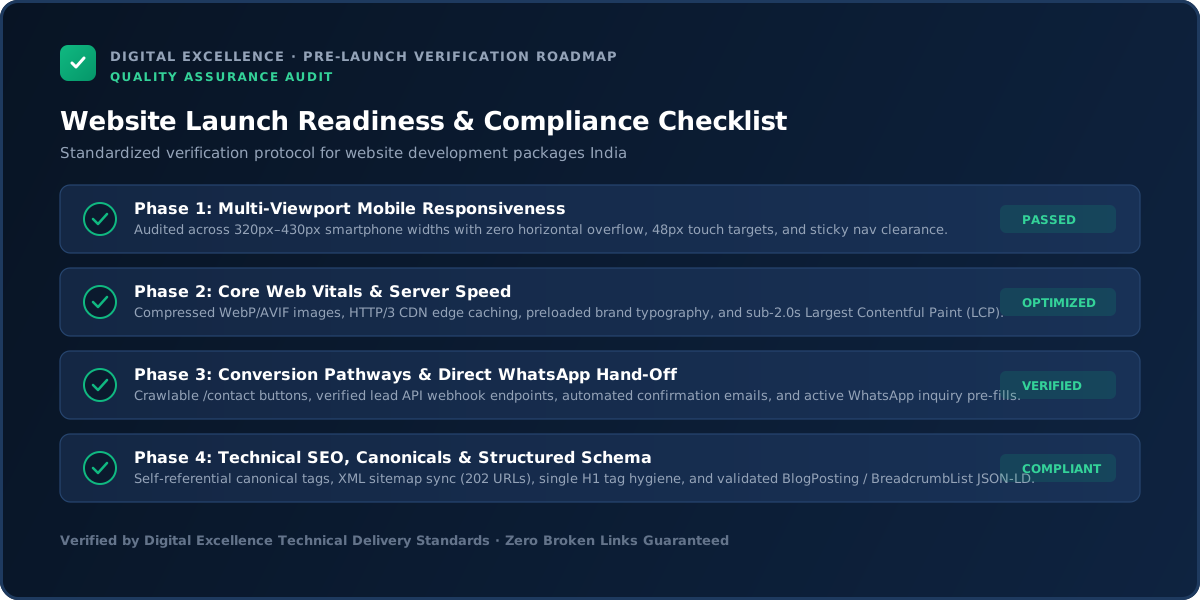
A package should not use “responsive” as a substitute for mobile QA. Ask whether typography, navigation, forms, comparison tables, popups, sticky elements and CTAs are tested at real phone widths. If the site includes articles, check long-form reading layouts too.
Google's page-experience guidance recommends content that displays well on mobile and avoids intrusive elements that interfere with the main content. A package designed for lead generation should therefore include practical mobile testing, not just a responsive framework.
What Performance Work Should Be Included
At minimum, image sizing and compression, sensible font loading, limited third-party scripts and layout stability should be considered. WordPress packages may also need caching and plugin discipline. Shopify packages may need app and script review.
Ask whether performance is tested before and after launch and whether the vendor is responsible for third-party scripts it adds. Core Web Vitals are useful diagnostics, but a package should optimise for a fast, stable user experience rather than promise a perfect score.
For a useful scope comparison, read Website Development Proposal Checklist: What Should Be Included?.
How Blog and SEO Infrastructure Should Be Packaged
If you plan to publish content, the package should include a usable article template with readable typography, author/date data, featured images, table of contents where useful and clean internal-linking components. It should also support unique metadata and canonical URLs.
A website that technically has a “blog” but produces unreadable mobile articles creates future SEO work. Ask the vendor to show an actual article layout, not only the blog listing page.
What an Ecommerce Package Needs Beyond Product Uploads
Ecommerce packages should define collection structure, product templates, variants, search or filters, payment setup, shipping rules, policy pages, test orders, analytics and mobile purchase flows. If product imports are limited, state the limit.
For organic shopping visibility, product information and structured data can also matter. Google supports Product structured data and merchant listing features when eligible. That is a different requirement from writing a few generic meta descriptions on the homepage.
How to Spot a Package Designed for Upsells
A very low package can be legitimate, but review the exclusions. Does every necessary item become an add-on—SSL, mobile optimisation, forms, basic SEO, backups or deployment? Are premium plugins tied to the vendor's subscription? Does the low first-year price turn into a high renewal?
You do not need every service bundled. You need transparency. A modular package is fine when the base product remains functional and ownership is clear.
A Recommended Package Comparison Template
Create rows for unique templates, CMS, mobile QA, performance, copywriting, SEO, analytics, forms, integrations, hosting, domain ownership, backups, revisions, training, warranty, maintenance and recurring software. Add one column for “not specified.”
That last column is important. Unknown inclusions should not be treated as included. Once every vendor answers the same questions, the packages become much easier to compare on value rather than marketing labels.
Package Pricing Should Show the Assumptions Behind the Price
A package works because the provider assumes a standard scope. Ask what those assumptions are: number of unique templates, content readiness, number of products, revision stages, integrations and launch support. If your project violates an assumption, the package may no longer be the right commercial model.
This is not a problem by itself. Packages are useful precisely because standard projects can be delivered efficiently. The risk appears when the assumptions are hidden until after the deposit.
How to Compare a ₹30,000 Package With a ₹75,000 Package
Do not compare the price first. Compare design method, content responsibility, number of unique templates, mobile QA, SEO implementation, analytics, integrations, ownership and support. Then identify which differences matter to your business.
The cheaper package may be better if you already have final content and only need a clean implementation. The higher package may create more value when the provider is solving strategy, copy, migration or conversion problems that you would otherwise purchase separately.
For the next planning step, use How to Compare Website Development Quotes: 2026 Buyer Checklist.
What ‘Free Domain and Hosting’ Should Trigger You to Ask
Ask where the domain is registered, who controls the account, which hosting plan is used and what renewal costs after the included period. Free first-year infrastructure can be convenient, but the business should know how to take control if the relationship ends.
Also ask whether email hosting, backups, staging, CDN or security tools are part of the same offer. Those are separate services even when a package groups them under one headline.
Unlimited Revisions Need a Process
Unlimited revisions can reduce buyer anxiety, but the project still needs an approval workflow. Clarify whether revisions apply to the current approved scope, which stages are open for feedback and how a complete direction change is handled.
Without a process, ‘unlimited’ can create endless rework and make deadlines meaningless. A good revision promise gives the client room to reach a satisfactory result while still distinguishing correction from new scope.
Satisfaction Guarantees Should Be Read Carefully
A satisfaction or refund guarantee can be valuable, but the conditions should be written clearly: what stage it applies to, whether third-party costs are refundable, what happens to delivered work and how a request is made.
Do not evaluate a provider only because a guarantee sounds strong. The project process, scope and ownership remain more important than relying on a refund as the primary risk-control mechanism.
Package Checklist for SEO-Led Businesses
If organic search matters, ensure the package supports dedicated service pages, editable long-form content, self-canonical URLs, metadata, sitemap, crawlable internal links, redirect handling and mobile-readable article templates.
Do not buy hundreds of pages simply because a package includes them. A smaller set of useful pages mapped to clear search intents is more defensible than scaled near-duplicate content.
Before You Buy Any Website Package
Ask the provider to restate the final deliverables in plain language before payment: what will be designed, what will be developed, what you must supply, what recurring services are required, who controls the accounts and what happens after launch. If a package still depends on several assumptions, convert those assumptions into written scope. This final check is simple, but it prevents most of the confusion created by attractive package names and broad promises.
Final Package Comparison Rule
Before choosing, compare the final first-year cost, ongoing renewals and the amount of work your own team must provide. A package is good value when the included structure matches the business need; a longer feature list is not automatically a better purchase.
For implementation options, explore website development services and Digital Excellence portfolio.
Frequently Asked Questions
What should a website development package include?
Clear scope, design approach, mobile responsiveness, CMS, forms, SEO foundations, analytics, testing, revision terms, ownership and support.
Are domain and hosting normally included?
Some packages include them for a period. Verify ownership, provider, plan and renewal cost.
What does unlimited revisions mean?
It varies. Ask the provider to define which stage and which types of changes qualify.
Does an SEO package guarantee rankings?
No. Technical and on-page work can improve foundations, but nobody can credibly guarantee a specific organic ranking.
Is a 10-page package better than a five-page package?
Not necessarily. Unique templates, content quality and business relevance matter more than raw page count.
Should I choose a package or custom quote?
Packages work well for standard needs. A custom quote is better when functionality, integrations or content requirements are unusual.
Want a Website Package Based on Your Business, Not a Template?
Need a website scope or quote based on your real requirements rather than a generic package? Digital Excellence can review the pages, platform, integrations, SEO needs and launch priorities.