20 Questions to Ask Before Hiring a Website Developer

Hiring a website developer is easy. Choosing one who can build the right website, communicate clearly and leave you with an asset you actually control is harder. The problem is that most website proposals look similar at first. They mention responsive design, SEO, fast loading and support. The important differences are hidden in how the project will be planned, who creates the content, what is included in the price, which accounts you own and what happens after launch. The best questions are therefore not “Can you build a website?” or “How much?” They are questions that reveal process, judgement and accountability. This checklist is designed for business owners comparing freelancers, agencies or development teams.
Table of Contents
- 1. Can You Show Me Live Websites, Not Just Screenshots?
- 2. Which Platform Do You Recommend for My Project, and Why?
- 3. What Exactly Is Included in the Quote?
- 4. How Will the Website Work on Mobile?
- 5. What SEO Work Is Included?
- 6. Who Is Responsible for Website Copy and Images?
- 7. How Will You Handle Website Speed?
- 8. Have You Worked With the Integrations I Need?
- 9. Who Will Own the Domain and Hosting?
- 10. Will I Have Access to the Source Code?
- 11. What Is the Timeline, and What Do You Need From Me?
- 12. How Do Revisions Work?
- 13. What Will Cost Extra?
- 14. What Happens After the Website Launches?
- 15. How Will Analytics and Conversions Be Tracked?
- 16. How Do You Handle Security and Backups?
- 17. What Does Handover Look Like?
- 18. What Are the Biggest Red Flags?
- 19. Freelancer or Agency?
- 20. Simple Hiring Scorecard
- Final Takeaway
- Ask How the Developer Makes Decisions, Not Just Which Tools They Use
- Ask What They Need From You to Do Their Best Work
- Ask How They Handle Scope Changes
- Ask for a Pre-Launch Checklist
- The Best Hiring Question: What Would You Change About My Brief?
- Frequently Asked Questions
1. Can You Show Me Live Websites, Not Just Screenshots?
Screenshots show visual design but hide navigation, responsiveness, performance, forms and real content. Ask for live examples and open them on your phone.
Look for variety. If every project has the same hero, animation and structure, the developer may be applying one template to every business. Reusable systems are not bad, but the final website should still fit the client's audience.
Also ask what the developer personally did on each example. A portfolio can include projects where their contribution was limited.
2. Which Platform Do You Recommend for My Project, and Why?
A strong developer should be able to explain why WordPress, Shopify, WooCommerce, Next.js or another approach fits your specific requirements.
Be cautious when the answer is always the same platform regardless of the project. A normal service website rarely needs a complex custom application. A marketplace should not be forced into a basic page builder simply because that is what the developer knows.
The explanation should cover editing, performance, integrations, ecommerce requirements and long-term maintenance.
3. What Exactly Is Included in the Quote?
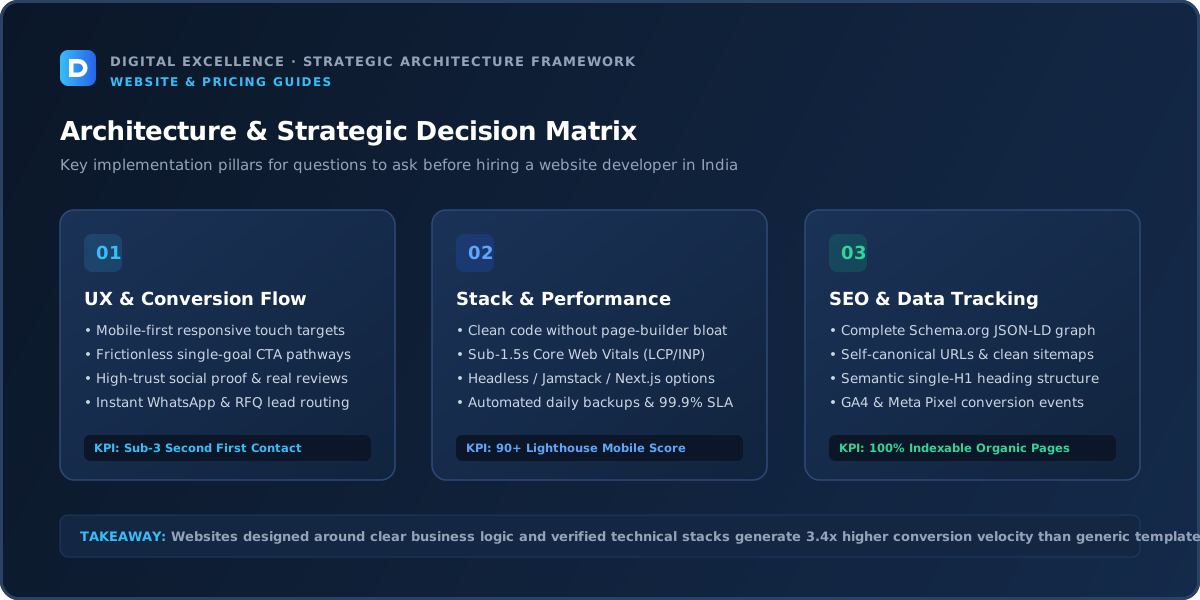
Ask for a written list of pages, unique templates, forms, integrations, ecommerce features, product uploads, copywriting, images, SEO work, analytics, hosting, maintenance and revisions.
“Five-page website” is not enough detail. Does the price include custom design? Mobile-specific adjustments? Legal pages? Blog setup? Contact-form notifications? Basic speed optimisation?
The clearer the scope, the fewer surprises after work begins.
4. How Will the Website Work on Mobile?
Do not accept “it will be responsive” as the full answer. Ask how navigation, typography, tables, forms, images and floating buttons are handled at smaller widths.
Review the developer's existing work at 375px or on a real phone. Mobile pages should not feel like squeezed desktop layouts.
If most of your traffic comes from social media or Google on mobile, this question should be near the top of the list.
5. What SEO Work Is Included?
SEO can mean anything from installing a plugin to designing an entire search strategy. Ask specifically about URL structure, title tags, meta descriptions, headings, internal links, image alt text, canonical tags, sitemap, robots, structured data and redirects.
Development-level SEO creates a clean foundation. It does not guarantee rankings for competitive keywords.
If ongoing content, link acquisition or local SEO is included, ask for those deliverables separately so expectations remain realistic.
6. Who Is Responsible for Website Copy and Images?
Projects often stall because both sides assume the other is writing the content. Confirm who provides service descriptions, team information, testimonials, product data, photos and legal text.
If the developer provides copywriting, ask whether it is original and researched or generated with minimal review. For SEO pages, useful content should answer real customer questions rather than repeat a keyword.
If you provide content, request a checklist and deadlines early in the project.
7. How Will You Handle Website Speed?
Ask about image optimisation, fonts, scripts, caching and third-party tools. The developer should understand that adding endless animation and plugins can hurt real-world performance.
Do not obsess over one perfect test score, but expect the site to become usable quickly and remain stable as it loads.
For ecommerce, ask how apps and tracking scripts will be managed because they can accumulate over time.
For a related buying decision, see Hire a Website Developer in India: 2026 Checklist.
8. Have You Worked With the Integrations I Need?
List the systems you already use: CRM, booking, payment gateways, shipping, email marketing, ERP, analytics or WhatsApp automation.
The developer does not need experience with every exact vendor, but should understand APIs, webhooks or supported integrations where required.
Ask how failures are handled. A connection that works once in a demo is not the same as a reliable production integration.
9. Who Will Own the Domain and Hosting?
Your business should normally control its domain registration and have appropriate access to hosting or deployment accounts.
Avoid arrangements where the developer owns everything in a personal account and you have no independent access. That creates unnecessary dependence.
If the agency manages infrastructure for convenience, clarify the process for transferring access if you ever leave.
10. Will I Have Access to the Source Code?
For custom development, ask where the code is stored and whether your company will have repository access. For WordPress, make sure you have admin and hosting access. For Shopify, the store should belong to your business account.
Source-code ownership and licensing can vary by contract, so read the terms rather than assuming.
Even if you plan to work with the same developer for years, proper access protects both sides.
11. What Is the Timeline, and What Do You Need From Me?
A reliable timeline should include client dependencies. If the agency needs copy, product data or approvals by specific dates, those responsibilities should be visible.
Ask what happens when feedback is late or scope changes. A developer cannot guarantee a deadline while requirements are continuously moving.
Milestones are more useful than one final launch date.
12. How Do Revisions Work?
“Unlimited revisions” can sound attractive, but the definition matters. Does it cover changes to an approved design? New pages? New functionality? Rebuilding the project in a different style?
A professional process separates corrections and reasonable design feedback from scope changes.
Understand how feedback is submitted and how many decision-makers are involved. Consolidated feedback moves projects much faster.
13. What Will Cost Extra?
Ask this directly. Common extras include premium themes, plugins, apps, stock assets, product uploads beyond a limit, copywriting, complex animations, new features, migration and third-party software.
Also ask about taxes and recurring fees.
The objective is not to eliminate every additional cost. It is to make them predictable.
For a useful scope comparison, read Choose a Website Development Company in India.
14. What Happens After the Website Launches?
Ask whether the developer provides a warranty period, maintenance plan or ongoing support. Define what maintenance includes.
Security updates and backups are different from new landing pages. Bug fixes are different from feature development.
If the website is important to daily operations, understand response times for urgent problems.
15. How Will Analytics and Conversions Be Tracked?
At minimum, you should know whether analytics is connected. Lead-generation businesses may also need form submissions, calls, WhatsApp clicks or booking conversions tracked.
Ecommerce stores need reliable purchase and revenue tracking.
If you run ads, ask who verifies the tracking before campaigns send traffic to the new site.
16. How Do You Handle Security and Backups?
The answer depends on the platform. WordPress sites need update and backup processes. Custom applications need dependency, authentication and infrastructure practices. Shopify manages much of the core platform but merchants still control accounts and apps.
Ask where backups exist and how restoration works. Do not wait for a problem to discover that nobody owns recovery.
For a higher-risk project, a small paid discovery or pilot can be more informative than another sales call. Ask a shortlisted developer to review one real workflow, migration risk or page requirement and produce a concrete output such as a sitemap, technical recommendation or scoped prototype.
The purpose is not to get free work. It is to see how the developer thinks, communicates trade-offs and turns ambiguity into a plan. For simpler projects, a detailed proposal and relevant live work may be enough.
17. What Does Handover Look Like?
A proper handover may include admin access, domain and hosting access, repository access, documentation, plugin or app details and a short training session.
Ask what your team can edit without the developer. A CMS is only useful if people understand how to use it safely.
Documenting the final setup reduces dependence and makes future maintenance easier.
18. What Are the Biggest Red Flags?
Be cautious about guaranteed #1 Google rankings, guaranteed revenue or conversion promises without context. Be cautious if the provider cannot show live work, refuses to clarify ownership or hides recurring software costs.
Another red flag is agreeing to every request without asking questions. Good developers need to understand the business before recommending architecture.
Extremely low quotes are not automatically bad, but investigate what has been removed from the scope to reach that price.
19. Freelancer or Agency?
A freelancer can be excellent when one person has the skills required and the scope is focused. Communication is direct and overhead can be lower.
An agency can be useful when the project needs specialised design, development, content and SEO skills or ongoing support.
Choose based on actual people, process and accountability rather than assuming one category is always better.
For the next planning step, use How to Compare Website Development Quotes: 2026 Buyer Checklist.
20. Simple Hiring Scorecard
Create your own decision sheet. Score each candidate on relevant portfolio quality, communication, platform fit, scope clarity, mobile quality, SEO understanding, ownership, support and total cost.
Do not assign points only to price. A quote that is ₹20,000 cheaper but excludes content, migration and support may not be cheaper in practice.
The scorecard does not choose for you; it forces you to compare the same criteria.
Final Takeaway
The best questions to ask before hiring a website developer are the ones that make hidden assumptions visible. Platform, content, SEO, ownership, support and recurring costs can matter as much as visual design.
A good provider should welcome detailed questions because a clear scope protects the developer as well as the client. Choose the team whose process and judgement fit your project, not simply the proposal with the most features or the lowest price.
For implementation options, explore website development services and Digital Excellence portfolio.
Ask How the Developer Makes Decisions, Not Just Which Tools They Use
A developer can know WordPress, Shopify, React and dozens of tools and still make poor product decisions. Ask why they chose a particular navigation structure, why a portfolio project used one platform instead of another, or what they would remove from your initial brief.
Good answers reveal trade-offs. They show whether the developer understands customers and business constraints rather than simply implementing every requested feature.
You are hiring judgement as well as code.
Ask What They Need From You to Do Their Best Work
A healthy project is not a one-way transaction. Developers may need access to brand assets, existing analytics, product information, stakeholder feedback and business context.
Ask for a client checklist before the project begins. If the provider can explain exactly what they need and when, the project is less likely to stall.
This question also reveals how organised their process is before you pay a deposit.
Ask How They Handle Scope Changes
New ideas will appear during development. Ask how the team records and estimates them. A mature process may keep launch-critical work in the current scope and move enhancements to a later phase.
Avoid two extremes: a provider who refuses every reasonable clarification and a provider who agrees to unlimited new features without discussing time or cost. Clear change management protects the relationship and the deadline.
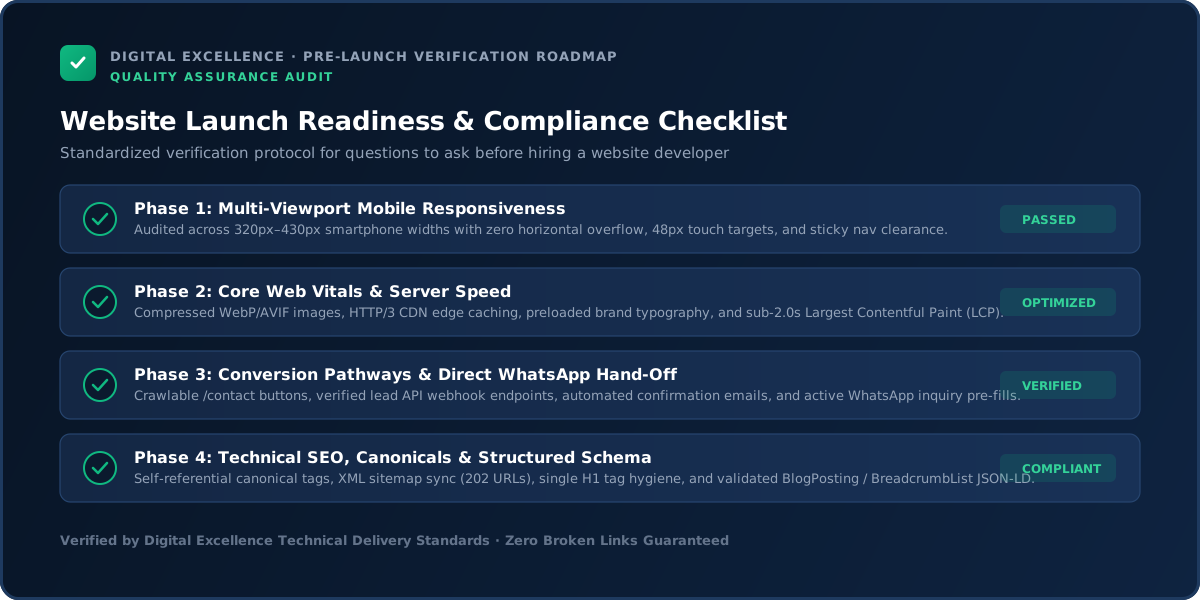
Ask for a Pre-Launch Checklist
A good developer should have a repeatable launch process covering forms, links, responsive layouts, SEO metadata, redirects, analytics, backups, SSL, domain configuration and production testing.
The exact checklist depends on the project, but having one is valuable evidence that launch quality is systematic rather than improvised.
The Best Hiring Question: What Would You Change About My Brief?
Give the developer your requirements and ask what they would remove, simplify or challenge. Someone who only says yes may be trying to win the project rather than improve it. A thoughtful developer should identify unnecessary complexity, missing information and potential risks.
The answer shows whether they can act as a technical partner instead of only an order-taker. For a business website, that judgement often creates more value than one extra feature on the proposal.
Frequently Asked Questions
What should I check in a website developer's portfolio?
Open live projects on mobile, test navigation and forms, and ask what the developer personally delivered.
Should I hire a freelancer or agency?
Either can work. Choose based on required skills, accountability, communication and support.
Should my domain be in my name?
Your business should normally control the domain account or have clear ownership and transfer rights.
Can a developer guarantee Google rankings?
No credible developer can guarantee a specific organic ranking. They can implement SEO foundations and ongoing strategies, but search results depend on competition and many external factors.
How many revisions should be included?
The number matters less than the definition. Clarify what counts as normal feedback versus new scope.
Should I ask for source code?
For custom development, repository access and ownership terms should be clear. For CMS platforms, make sure you have appropriate admin and hosting access.
Planning to Hire a Website Developer?
Need a website scope or quote based on your real requirements rather than a generic package? Digital Excellence can review the pages, platform, integrations, SEO needs and launch priorities.