Why Is My Jewellery Website Getting Visitors but No Sales?

If a jewellery store gets traffic but few sales, the website may be only one part of the problem. Product value, traffic intent, pricing, media, fit or specification uncertainty, delivery and trust can all affect the purchase decision. The fastest way to improve results is to follow the funnel: traffic → category/product discovery → product evaluation → add-to-cart → checkout → purchase. This guide focuses on the issues that are especially important for jewellery ecommerce.
Table of Contents
- Start With Traffic Quality
- Product Discovery for Jewellery Shoppers
- Product Page Information Gaps
- Mobile Shopping Friction
- Trust and Risk
- Price, Shipping and Returns
- Speed, Apps and Technical Reliability
- Ecommerce SEO Can Bring the Wrong Traffic Too
- Analytics: Find the Exact Drop
- High Ticket Value Changes the Trust Requirement
- Fix Order
- 30-Day Recovery Plan
- Final Takeaway
- Identify the First Drop in the Product Funnel
- Check Product Discovery Before Product Pages
- Use Product Questions as a Content Backlog
- Review Offer Economics
- Audit Mobile From the Actual Acquisition Source
- Place Proof Beside the Risk
- Check Cart and Checkout as a Separate System
- Use SEO Query Data to Judge Traffic Quality
- Use Returns and Support as Conversion Research
- Run a 30-Day Recovery Cycle
- Final Conversion Principle
- Review Conversion by Product Availability
- Use Search and Filter Data as Demand Research
- Create a Customer-Question Feedback Loop
- Audit Post-Purchase Experience
- Prioritise High-Traffic, High-Intent Products
- Final Recovery Checklist
- Compare New and Returning Customers
- Review Campaign Landing Products
- Use Commercial Feedback, Not Only Web Analytics
- Final Conversion Standard
- Check Search-to-Product Message Match
- Use Support Questions to Prioritise Template Changes
- Final Recovery Principle
- Advanced jewellery Conversion Note
- Final Category-Specific Check
- Closing Implementation Note
- Final SEO Note
- Frequently Asked Questions
Ecommerce Diagnostic Funnel
| Stage | What to inspect |
|---|---|
| Traffic | audience and campaign intent |
| Discovery | categories, filters, search |
| Product | media, details, price, variants |
| Trust | reviews, policies, business identity |
| Cart | total cost and CTA behaviour |
| Checkout | payment, shipping, errors |
| Post-purchase | confirmation and support |
Start With Traffic Quality
In this article’s context, start with traffic quality matters only if it explains a real leak in the “why is my jewellery website not generating sales” journey. Validate the issue with page-level behaviour before assuming a full redesign is needed.
A store can receive large volumes from social or broad informational search without strong purchase intent. Compare source, campaign, query, geography and device.
If a campaign promotes one product, land the visitor close to that product. Do not ask them to rediscover the offer through a generic homepage.
Product Discovery for Jewellery Shoppers
Allow browsing by product type, material, occasion, collection and price where it matches your catalogue. Filters should help narrow a high-consideration purchase rather than overwhelm the shopper.
Use collection names and filters that reflect customer language rather than only internal merchandising terms. Search should tolerate common product names and relevant attributes where the catalogue is large enough to justify it.
Product Page Information Gaps
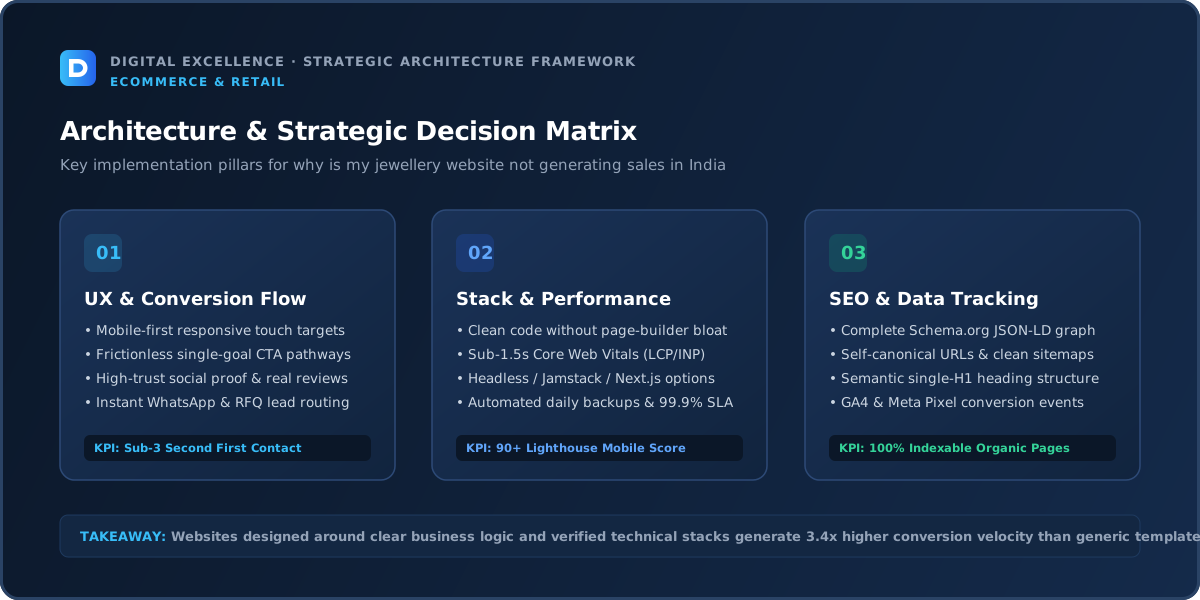
High-value jewellery needs precise material, size and craftsmanship detail plus media that allows close inspection. Vague descriptions create risk when the shopper cannot physically handle the item.
If shoppers repeatedly ask the same question in DMs or support before buying, the product page is probably missing information. Bring high-frequency decision questions closer to the buy button.
Mobile Shopping Friction
Ensure pinch/zoom, galleries, selectors and product specifications remain usable without slow loading or overlapping sticky controls.
Check the full journey on small screens: navigation, filters, galleries, variants, size/specification tools, sticky add-to-cart, cart and checkout. Remove overlays that compete with the purchase task.
Trust and Risk
Make authentic certifications, warranties, returns, shipping protection and business contact information clear when genuinely applicable. Do not invent verification signals.
Use genuine customer evidence where available and make policies easy to understand. Avoid fake scarcity, fake reviews or unsupported claims; they can damage the credibility you are trying to create.
Price, Shipping and Returns
In this article’s context, price, shipping and returns matters only if it explains a real leak in the “why is my jewellery website not generating sales” journey. Validate the issue with page-level behaviour before assuming a full redesign is needed.
Visitors can like a product and still reject the total commercial offer. Compare price positioning, shipping fee, delivery promise, COD/payment options and return terms against the expectations created by your traffic source.
Show enough information before checkout that customers are not surprised at the final step.
Speed, Apps and Technical Reliability
In this article’s context, speed, apps and technical reliability matters only if it explains a real leak in the “why is my jewellery website not generating sales” journey. Validate the issue with page-level behaviour before assuming a full redesign is needed.
Heavy media and ecommerce apps can slow product pages. Test Core Web Vitals and real devices, then review which third-party scripts create meaningful value.
Also test add-to-cart, coupons, variants, payment methods and order confirmation. Conversion analysis is unreliable if the journey intermittently breaks.
Ecommerce SEO Can Bring the Wrong Traffic Too
Use category pages that answer real jewellery shopping intent and keep product specifications consistent. Avoid mass-generating thin pages for every attribute.
Use Google Search Console to identify which queries and landing pages are growing. Build useful category and product content around real demand, and connect editorial guides to the relevant collection or product through contextual internal links.
Analytics: Find the Exact Drop
In this article’s context, analytics: find the exact drop matters only if it explains a real leak in the “why is my jewellery website not generating sales” journey. Validate the issue with page-level behaviour before assuming a full redesign is needed.
Validate product-view, add-to-cart, checkout and purchase events. Segment by product, device and source. Store-wide averages can hide that a handful of products or one traffic source is causing most of the gap.
If possible, compare repeat vs new visitors and order value, but keep the dashboard focused on decisions rather than collecting every possible event.
For a related diagnosis, see Jewellery Website Development Cost in India.
High Ticket Value Changes the Trust Requirement
A customer considering a high-value piece may revisit the site, compare several products and contact the business before purchasing. Support those behaviours with wishlists or consultation paths where useful rather than treating immediate checkout as the only success.
Fix Order
In this article’s context, fix order matters only if it explains a real leak in the “why is my jewellery website not generating sales” journey. Validate the issue with page-level behaviour before assuming a full redesign is needed.
Fix broken functionality and payment issues first. Then address irrelevant traffic, missing product information, weak trust, mobile friction and commercial surprises. Performance optimisation and experiments come after the basic journey works.
Document changes so you can understand which intervention likely influenced the funnel.
30-Day Recovery Plan
In this article’s context, 30-day recovery plan matters only if it explains a real leak in the “why is my jewellery website not generating sales” journey. Validate the issue with page-level behaviour before assuming a full redesign is needed.
Week one: tracking, payments, shipping and mobile QA. Week two: collection and product information. Week three: proof, offer and high-traffic product pages. Week four: compare funnel changes and customer questions.
Do not redesign every template at once unless the same structural problem appears across the catalogue.
Final Takeaway
For jewellery ecommerce, conversion improves when the store helps shoppers evaluate the product with less uncertainty. Diagnose traffic, discovery, product information, trust and transaction in order before scaling acquisition.
Identify the First Drop in the Product Funnel
Measure collection or search → product view → add-to-cart → checkout → purchase by device, source and representative products. The largest drop tells you whether the first investigation should focus on discovery, product confidence or transaction.
For jewellery, pay special attention to authenticity and high-ticket purchase risk. A store-wide conversion rate can hide this category-specific friction.
Check Product Discovery Before Product Pages
In this article’s context, check product discovery before product pages matters only if it explains a real leak in the “why is my jewellery website not generating sales” journey. Validate the issue with page-level behaviour before assuming a full redesign is needed.
Customers cannot buy items they cannot find. Review collection naming, filters, search terms and mobile navigation. Use the attributes shoppers actually understand rather than internal inventory terminology.
If many sessions never reach a product page, changing the buy button is too late in the funnel.
Use Product Questions as a Content Backlog
Collect recurring questions from support, social DMs, sales and returns. Turn them into structured product content such as purity, weight, stone and sizing details.
This is more defensible than generic AI copy because it responds to real customer uncertainty. Update templates when the same question appears across many products.
Review Offer Economics
In this article’s context, review offer economics matters only if it explains a real leak in the “why is my jewellery website not generating sales” journey. Validate the issue with page-level behaviour before assuming a full redesign is needed.
A shopper can understand the page perfectly and still reject price, shipping, delivery or return terms. Compare the total proposition with the alternatives customers see.
Do not disguise a commercial problem as a design problem. The website should explain genuine differentiation, but it cannot invent value the offer does not provide.
Audit Mobile From the Actual Acquisition Source
Open the live social ad, search result or campaign link on a phone and follow the complete journey. Check zoomable media, size selectors and high-value checkout, page weight, popups and sticky UI.
This reveals problems that disappear when the team tests a cached homepage on desktop.
For another useful funnel check, read Ecommerce Traffic but No Sales? Diagnose the Funnel.
Place Proof Beside the Risk
macro photography, genuine certifications where applicable and accurate specifications should appear where it helps the shopper decide. Generic trust badges cannot replace category-specific evidence.
Use real reviews and policy information where available. Remove unsupported urgency or authority claims that can make the store feel less credible.
Check Cart and Checkout as a Separate System
After add-to-cart, test shipping, discounts, payment, error states and confirmation. high-value shipping, insurance, resizing, returns and inventory can create friction even when product pages are strong.
Measure checkout starts and purchases separately so transaction problems do not get blamed on merchandising.
Use SEO Query Data to Judge Traffic Quality
Search Console can show whether product and category pages are attracting product type, material, occasion and collection intent or broad informational visitors. Different intent will convert differently.
Improve content and internal links so useful guides lead naturally to relevant commercial pages without turning every article into a sales pitch.
Use Returns and Support as Conversion Research
In this article’s context, use returns and support as conversion research matters only if it explains a real leak in the “why is my jewellery website not generating sales” journey. Validate the issue with page-level behaviour before assuming a full redesign is needed.
Post-purchase complaints can reveal pre-purchase uncertainty that the page failed to resolve. Review reasons related to expectations, variants, delivery and product information.
Reducing uncertainty before purchase can improve conversion quality as well as customer satisfaction.
Run a 30-Day Recovery Cycle
In this article’s context, run a 30-day recovery cycle matters only if it explains a real leak in the “why is my jewellery website not generating sales” journey. Validate the issue with page-level behaviour before assuming a full redesign is needed.
Week one: tracking, mobile and technical reliability. Week two: discovery and product information. Week three: trust, offer and checkout. Week four: compare equivalent traffic and decide the next hypothesis.
Avoid changing the entire theme while several funnel stages are still unmeasured.
Final Conversion Principle
The store should make the jewellery purchase easier to evaluate than it would be without the website. Fix the first evidence-backed source of uncertainty or friction before scaling traffic.
Review Conversion by Product Availability
Low conversion can come from high traffic landing on unavailable or incomplete variants. Compare behaviour when the desired option is in stock versus when users encounter sold-out states.
For jewellery, inventory and variant availability should be part of the conversion analysis rather than treated only as an operations issue.
Use Search and Filter Data as Demand Research
Internal searches and filter combinations can show which dimensions, weight, metal/purity, stones, certification and care customers care about. Frequent zero-result searches may reveal missing products or terminology problems.
Use this data to improve both catalogue strategy and navigation.
Create a Customer-Question Feedback Loop
Tag questions related to authenticity and high ticket value, dimensions, weight, metal/purity, stones, certification and care and delivery. Review them monthly and update product templates or policies.
This keeps the site aligned with real buying friction as products and campaigns change.
For the next troubleshooting step, use Customers Leaving Product Pages Without Buying? Fix These Gaps.
Audit Post-Purchase Experience
shipping protection, resizing and returns affect reviews, repeat purchase and future trust. Confirmation, status updates and support should match the promises made before checkout.
Conversion optimisation that ignores fulfilment can create more first orders but worse long-term customer value.
Prioritise High-Traffic, High-Intent Products
In this article’s context, prioritise high-traffic, high-intent products matters only if it explains a real leak in the “why is my jewellery website not generating sales” journey. Validate the issue with page-level behaviour before assuming a full redesign is needed.
Do not rewrite every product at once. Start with items receiving meaningful traffic and showing poor product-view-to-cart behaviour, then apply proven template improvements across the catalogue.
This creates faster learning and avoids large redesigns based on low-volume SKUs.
Final Recovery Checklist
Verify traffic quality, product discovery, dimensions, weight, metal/purity, stones, certification and care, trust, mobile UX, shipping/payment and checkout in that order. Keep changes documented so the team learns which intervention moved the funnel.
The objective is a more confident customer decision, not simply a more attractive theme.
Compare New and Returning Customers
Returning jewellery shoppers may use the site differently from first-time visitors. Compare discovery, product-page engagement and purchase behaviour separately where analytics supports it.
If returning customers struggle, account, repeat-purchase or navigation changes may deserve attention rather than more acquisition spend.
Review Campaign Landing Products
Creator, social and paid campaigns often concentrate traffic on a small number of products or collections. Make sure those destinations have complete authenticity and material and dimensions, purity and stones information before scaling the campaign.
Campaign performance can be distorted when a high-traffic SKU is out of stock or under-documented.
Use Commercial Feedback, Not Only Web Analytics
Ask support and sales why interested shoppers do not buy. Reasons related to insured delivery and resizing, price or product expectations may never appear clearly in clickstream data.
Combine qualitative evidence with funnel metrics before changing the theme.
Final Conversion Standard
The jewellery store should help a qualified shopper move from interest to a confident purchase with fewer unanswered questions. Keep the catalogue, operations and website learning from one another after launch.
Check Search-to-Product Message Match
If search or ad traffic arrives for a specific jewellery need, the landing collection or product should address it immediately. Generic brand storytelling should not force high-intent users to rediscover the reason they clicked.
Use Support Questions to Prioritise Template Changes
Tag recurring questions around authenticity, sizing and insured delivery. If the same uncertainty appears repeatedly, solve it in the product template or policy rather than answering it manually forever.
Final Recovery Principle
A strong jewellery conversion program improves product confidence, transaction reliability and post-purchase expectations together. Keep measuring the complete journey instead of optimising one button in isolation.
Advanced jewellery Conversion Note
For high-value jewellery, review assisted journeys such as WhatsApp, phone or consultation as well as online checkout. Some customers need reassurance about authenticity, sizing or delivery before purchasing.
Final Category-Specific Check
Keep certification, material and warranty information accurate and close to the decision. High-ticket trust grows from verifiable detail, not pressure.
Closing Implementation Note
In this article’s context, closing implementation note matters only if it explains a real leak in the “why is my jewellery website not generating sales” journey. Validate the issue with page-level behaviour before assuming a full redesign is needed.
Continue reviewing real customer questions, support issues and purchase data after launch. Category-specific conversion improves when the website reflects how shoppers actually decide, not when generic ecommerce tactics are copied without evidence.
Final SEO Note
High-value jewellery conversion is strongest when product detail and trust remain consistent from ad or search result through delivery policy and checkout.
For implementation options, explore website development services and Digital Excellence portfolio.
Frequently Asked Questions
Why is my jewellery website getting traffic but no sales?
Traffic quality, product-market fit, price, product information, trust, mobile UX, shipping and checkout friction can all contribute.
Should I change my ecommerce theme?
Only when the theme creates structural UX, performance or merchandising limitations. Diagnose the funnel first.
Can product photography affect conversion?
Yes. In visual categories, media is part of the product information and trust experience.
Should I offer discounts to fix low sales?
Discounts can change the offer but should not be used to hide product, traffic or UX problems.
What should I track?
At minimum product views, add-to-cart, checkout starts and purchases, segmented by useful dimensions such as device and traffic source.
Can SEO traffic convert poorly?
Yes, especially when pages rank for broad informational or mismatched queries.
Need Help Improving a Jewellery Store?
Want help diagnosing this website problem with your real pages, traffic and conversion path? Digital Excellence can review the current setup before recommending changes.