Gifting Business Ecommerce Website Development Cost in India

A gifting ecommerce website has to do more than display products. It needs to help shoppers understand recipient, occasion, budget, delivery date, personalisation and presentation, choose the right variant or option, trust the brand and complete payment comfortably on mobile. That is why gifting website development cost India varies with catalogue size, product data, design, photography, platform, filters, shipping, payments, integrations and the level of merchandising required. This guide breaks the project into practical cost drivers so gifting businesses can budget for a store that is easy to operate as well as attractive.
Table of Contents
- What Makes a Gifting Business Website Different?
- Catalogue Structure and Product Data
- Platform Choice: Shopify, WooCommerce or Custom
- Mobile Merchandising and Product Discovery
- Product Pages: What Shoppers Need Before Buying
- Trust, Policies and Commercial Clarity
- Payments, Shipping and Operations
- SEO Architecture for the Category
- Photography, Video and Creative Assets
- Performance and Core Web Vitals
- Analytics and Conversion Tracking
- Hidden and Recurring Costs
- How to Reduce Cost Without Weakening the Store
- What to Ask a Developer Before Hiring
- Final Takeaway
- Map the Gifting Business Buying Journey Before Design
- Budget for Product Data Quality
- Create a Merchandising System the Team Can Operate
- Use Category-Specific Product Templates
- Plan Operations Before Checkout Development
- Build Trust Into the Product System
- SEO Architecture Should Follow the Catalogue
- Use Mobile Revenue Paths as the QA Standard
- Create a Year-One Cost Model
- Final Cost Planning Principle
- Create a Content Standard for Every Gifting Business Product
- Plan for Campaign and Seasonal Traffic
- Use Customer-Service Workload in the ROI Calculation
- Create a Platform Exit Plan
- Final Development Checklist
- Post-Launch Growth Note
- Final Buyer Test
- Frequently Asked Questions
Gifting Business Website Planning Bands
| Level | Broad planning band | Typical scope |
|---|---|---|
| Starter store | ₹40,000–₹1,00,000 | standard platform, smaller catalogue |
| Growth store | ₹1,00,000–₹3,00,000 | custom UI, stronger product/collection UX |
| Advanced store | ₹3,00,000–₹7,00,000+ | integrations, migration, custom workflows |
What Makes a Gifting Business Website Different?
Gift shoppers are often buying for someone else under time pressure. Discovery by occasion, recipient and budget plus clear delivery timing can matter more than a conventional product taxonomy.
A generic ecommerce template can still be a good starting point, but the information hierarchy should reflect how customers evaluate gifting products. Design decisions should reduce buying uncertainty rather than simply decorate the catalogue.
Catalogue Structure and Product Data
The project cost changes with product count, variants, collections, tags, filters, images and data cleanliness. Products may need occasion, recipient, budget, theme and personalisation attributes. Bundles and gift boxes can create additional inventory or configuration logic.
Clean spreadsheets and consistent media save development time. If the agency has to reorganise SKUs, rename images, create categories or write product descriptions, catalogue work becomes a separate content and data project.
Platform Choice: Shopify, WooCommerce or Custom
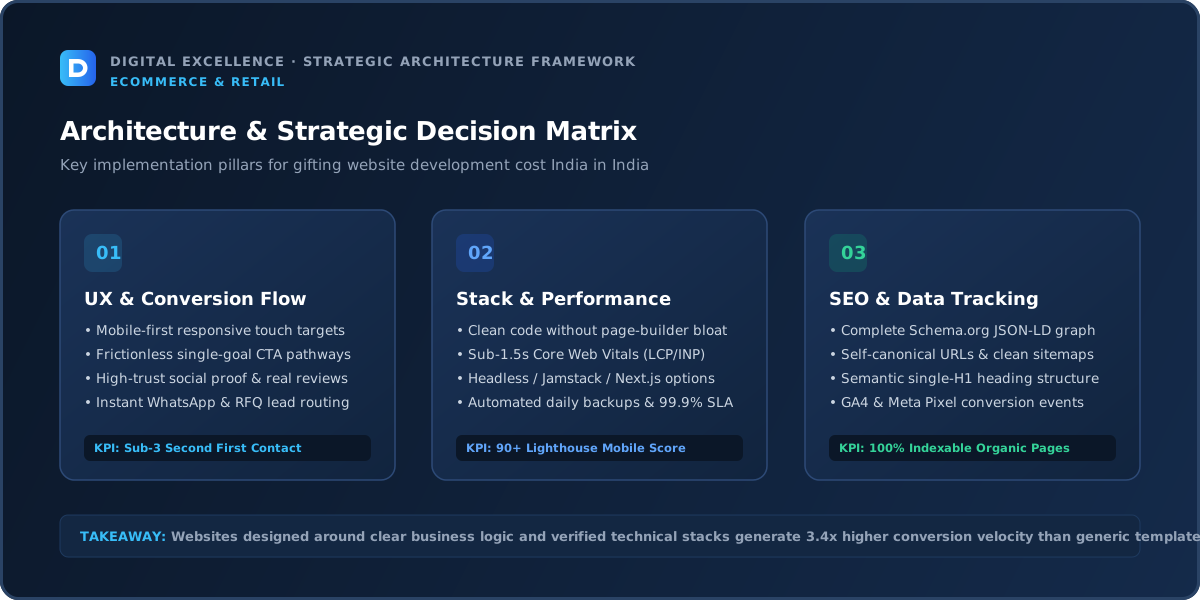
For “Gifting Business Ecommerce Website Development Cost in India”, apply platform choice: shopify, woocommerce or custom to the real product or store journey rather than as a generic website rule; the decision should reflect catalogue, mobile purchase behaviour and operational constraints.
Shopify can simplify hosting and core store operations. WooCommerce can fit businesses that value WordPress content and infrastructure control. Custom commerce is justified when the business has workflows that established platforms cannot handle cleanly.
Choose the platform based on operations, catalogue and integrations—not because one technology sounds more premium. The simplest platform that supports the actual business usually creates the lowest long-term complexity.
Mobile Merchandising and Product Discovery
Mobile gift shoppers need quick filters, delivery clarity and simple personalisation inputs without long multi-step forms.
Test collection browsing, search, filters, product media, variants, add-to-cart and cart editing at common phone widths. Mobile ecommerce should not feel like a desktop catalogue squeezed into one column.
Product Pages: What Shoppers Need Before Buying
Make contents, dimensions, personalisation limits, gift message, packaging and delivery expectations clear. Photos should show what the recipient will actually receive.
Product pages should answer the category's real objections. The more expensive, sensory or fit-sensitive the product, the more important media, specifications, size guidance or usage context becomes.
Trust, Policies and Commercial Clarity
Delivery reliability, replacement/damage policies and accurate product representation are central to gifting trust.
Use genuine reviews and evidence where available. Do not manufacture trust with fake counters, unsupported scarcity or invented ratings. Clear policies often reduce risk more effectively than decorative badges.
Payments, Shipping and Operations
Define date-based delivery, pin-code availability, gift messages, scheduled shipping, corporate bulk orders and personalised-product rules before development.
Operational rules should be defined before development. A beautiful store can still fail at launch when shipping zones, COD, inventory or order notifications were never tested end to end.
SEO Architecture for the Category
Occasion and recipient pages can serve distinct search demand when they offer genuine curated value rather than duplicate product lists.
Google's ecommerce guidance recommends making product and site structure understandable, and Product structured data can make actual product pages eligible for richer search presentations when the requirements are met. Do not put Product markup on this editorial guide; implement it on eligible product pages.
For a related buying decision, see Gift Store Traffic but No Sales? What to Fix.
Photography, Video and Creative Assets
Show packaging, box contents and scale clearly. Customers are evaluating presentation as much as the individual items.
If the business does not have consistent media, budget for creative production separately. Development can optimise and present assets well, but it cannot turn weak product photography into strong merchandising.
Performance and Core Web Vitals
For “Gifting Business Ecommerce Website Development Cost in India”, apply performance and core web vitals to the real product or store journey rather than as a generic website rule; the decision should reflect catalogue, mobile purchase behaviour and operational constraints.
Large product imagery, review widgets, marketing tags and ecommerce apps can make category pages heavy. Optimise image delivery, limit unnecessary scripts and test important templates on mobile.
Use Core Web Vitals as a diagnostic for loading, responsiveness and visual stability, but protect the shopping experience when making performance changes.
Analytics and Conversion Tracking
For “Gifting Business Ecommerce Website Development Cost in India”, apply analytics and conversion tracking to the real product or store journey rather than as a generic website rule; the decision should reflect catalogue, mobile purchase behaviour and operational constraints.
Track product views, add-to-cart, checkout and purchases correctly. Also measure category or search behaviour when product discovery is important.
Analytics should help answer practical questions: which products attract traffic but rarely enter cart, which traffic sources produce revenue, and where mobile shoppers leave the funnel.
How to Reduce Cost Without Weakening the Store
For “Gifting Business Ecommerce Website Development Cost in India”, apply how to reduce cost without weakening the store to the real product or store journey rather than as a generic website rule; the decision should reflect catalogue, mobile purchase behaviour and operational constraints.
Prepare product data and images before development, launch with a focused catalogue, use native platform features where suitable and move low-priority features to phase two.
Do not cut mobile QA, payment testing, ownership, backups or basic SEO foundations. Reduce unnecessary scope rather than removing reliability.
What to Ask a Developer Before Hiring
Ask for live ecommerce work, who handles catalogue setup, which features use apps versus custom code, how mobile QA works, what recurring software is required and who owns the store/accounts.
For gifting, ask specifically how they would handle occasion discovery, delivery dates, personalisation, bundles and corporate gifting flows. A useful answer should discuss the customer decision process, not only the technology stack.
Final Takeaway
The right gifting ecommerce budget pays for product discovery, trustworthy product detail, a reliable mobile purchase journey and an operating setup the team can maintain. Spend on category-specific buying needs before decorative complexity.
Map the Gifting Business Buying Journey Before Design
The customer is not simply choosing a product; they are evaluating recipient, occasion, budget, personalisation, presentation and delivery date. Map that decision from discovery through purchase and identify which information needs to appear on collection, product, cart and policy pages.
This journey should guide templates, filters and content. A beautiful generic store can still underperform when it does not reflect how gifting ecommerce customers actually compare options.
For a useful scope comparison, read Ecommerce Traffic but No Sales? Diagnose the Funnel.
Budget for Product Data Quality
Catalogue structure affects development more than many buyers expect. Define attributes, variants, collection rules, media naming and the fields required for exact box contents, customisation limits and delivery expectations. Clean source data reduces manual upload work and makes filters, search and SEO more reliable.
If the agency must clean inconsistent spreadsheets or create missing descriptions, treat that as a separate data/content workstream rather than hiding it inside page development.
Create a Merchandising System the Team Can Operate
For “Gifting Business Ecommerce Website Development Cost in India”, apply create a merchandising system the team can operate to the real product or store journey rather than as a generic website rule; the decision should reflect catalogue, mobile purchase behaviour and operational constraints.
The website should support campaign launches, featured products, seasonal collections and category ordering without requiring code for every change. Reusable sections and structured product fields can increase the initial scope but reduce ongoing developer dependency.
Ask the internal team to test common merchandising tasks before handover. Operational editability is part of ecommerce quality.
Use Category-Specific Product Templates
For gifting ecommerce, product pages should prioritise exact box contents, customisation limits and delivery expectations rather than forcing every item into a generic ecommerce layout. Reusable category-specific sections can keep content consistent while allowing the details that matter for this purchase.
Do not add fields simply because competitors have them. Use customer questions, returns and support data to decide what deserves prominence.
Plan Operations Before Checkout Development
scheduled delivery, personalisation, bundles, gift messages and corporate orders should be documented before the cart and checkout are considered complete. These rules influence platform configuration, apps, data and customer communication.
Run end-to-end order scenarios using representative products and locations. Operational rules discovered after launch are more expensive to fix because they often touch checkout, inventory and support together.
Build Trust Into the Product System
accurate box-content images, packaging and delivery policies should be part of the content plan, not added as a generic trust strip at the bottom. Buyers need proof near the point where uncertainty appears.
Avoid fabricated ratings, fake scarcity or claims the brand cannot substantiate. In visual consumer categories, authentic product information and consistent fulfilment usually build stronger long-term trust than aggressive conversion widgets.
SEO Architecture Should Follow the Catalogue
Map occasion, recipient, budget and gifting intent to genuine category and editorial pages. Keep collection names aligned with customer language, use unique product information and control low-value filter URLs.
Google's ecommerce guidance supports clear site structure and useful product information. Build indexable pages where there is distinct demand and value, not for every possible attribute combination.
Use Mobile Revenue Paths as the QA Standard
Because social, search and messaging traffic is often mobile, test occasion filters, personalisation fields and delivery-date controls on real phones. Verify page weight, tap targets, sticky elements, cart and checkout after review widgets and marketing tags load.
A responsive screenshot is not enough. The mobile user should be able to evaluate the product and complete the transaction without hidden controls or excessive scrolling.
For the next planning step, use Shopify Developer Cost in India.
Create a Year-One Cost Model
For “Gifting Business Ecommerce Website Development Cost in India”, apply create a year-one cost model to the real product or store journey rather than as a generic website rule; the decision should reflect catalogue, mobile purchase behaviour and operational constraints.
Combine development with platform, paid theme, apps/plugins, media production, payment, shipping tools, email/reviews and maintenance. Some features are cheaper to launch through an app but create recurring subscriptions.
Compare total ownership rather than only the project invoice. This makes platform and custom-development choices more rational.
Final Cost Planning Principle
Spend first on product information, mobile discovery, operational reliability and a maintainable catalogue. Add advanced animation or experimental commerce features after the core gifting ecommerce buying journey works cleanly.
Create a Content Standard for Every Gifting Business Product
Define the minimum information required before a product is published: box contents, personalisation rules, packaging and delivery expectations. This prevents the catalogue from becoming inconsistent as more items are added.
A content standard also makes imports, SEO and customer support easier because the same essential fields exist across the range.
Plan for Campaign and Seasonal Traffic
Gifting Business stores can experience concentrated traffic around launches, sales, occasions or creator campaigns. Test high-traffic landing pages, collection load and checkout before those events.
Prepare campaign sections in advance so marketing does not need emergency development during the busiest period.
Use Customer-Service Workload in the ROI Calculation
A better website can reduce repetitive questions about occasion/recipient discovery, delivery dates, personalisation, bundles and corporate gifting. Track which questions disappear after content and UX improvements.
This operational saving is part of website value even when it does not show directly in conversion rate.
Create a Platform Exit Plan
Keep business-owned domain, store account, analytics, customer data and documentation. Know how product data and media can be exported if the platform or developer changes.
Reversibility reduces long-term risk and prevents a successful gifting brand from becoming trapped by its first technical setup.
Final Development Checklist
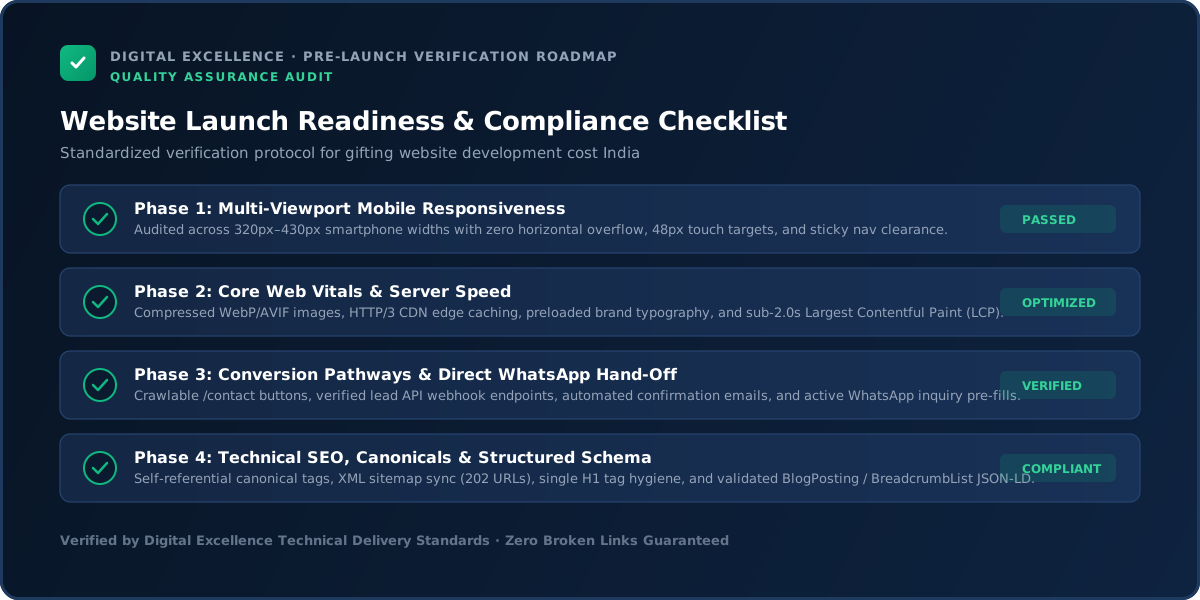
Before launch, validate product data, mobile discovery, occasion/recipient discovery, delivery dates, personalisation, bundles and corporate gifting, analytics, SEO metadata, order flow, notifications, policies and ownership.
The final website should be easy for both shoppers and the internal team to operate after the agency steps away.
Post-Launch Growth Note
A Gifting Business website should be reviewed after real campaigns and catalogue growth. Revisit occasion and recipient discovery, personalisation and presentation and delivery-date reliability using actual search, support and order data. The best initial build creates reusable systems that can absorb those learnings without requiring a redesign for every seasonal change.
Final Buyer Test
Before final sign-off, ask a customer unfamiliar with the brand to browse on mobile and explain the product, delivery dates, personalisation and presentation and the checkout expectations. Any important uncertainty they cannot resolve should become a content or UX task before launch.
For implementation options, explore website development services and Digital Excellence portfolio.
Frequently Asked Questions
How much does a gifting website cost in India?
A focused store may cost from the tens of thousands of rupees, while custom design, large catalogues and integrations can push the project into several lakhs. Scope determines the final quote.
Should I use Shopify or WooCommerce?
Both can work. Shopify simplifies hosted operations; WooCommerce provides WordPress-based flexibility. Choose based on your team, catalogue, content and integrations.
How many products should I launch with?
Launch the products the business can support with clean data, media and inventory. There is no SEO benefit to importing thousands of weak product pages simply to create volume.
Does ecommerce development include SEO?
Clarify the scope. Technical/on-page foundations can be included, while ongoing content and authority work are separate.
Do I need a custom theme?
Not always. A strong existing theme can be customised when requirements are standard. Custom work is justified when it improves real merchandising or operational needs.
What should I prepare before development?
Product data, brand assets, media, collection logic, policies, shipping rules, payment requirements and examples of the customer journey you want.
Planning a Gifting Business Ecommerce Website?
Need a website scope or quote based on your real requirements rather than a generic package? Digital Excellence can review the pages, platform, integrations, SEO needs and launch priorities.