Website builders and ready-made themes have made creating simple websites faster than ever.
For many businesses, that is a good thing.
Not every project requires custom development.
However, some businesses eventually reach a point where their requirements cannot comfortably fit inside a standard template, plugin stack or generic website builder.
The business may require a unique user experience.
There may be custom workflows.
Customers may need accounts.
The website might connect to internal systems.
A dashboard may be required.
There may be unusual ecommerce rules.
Performance may be especially important.
At that point, searching for a custom website development company in Mumbai begins to make sense.
Custom development means the website is planned around the requirements of the business instead of forcing the business to operate around the limitations of a template.
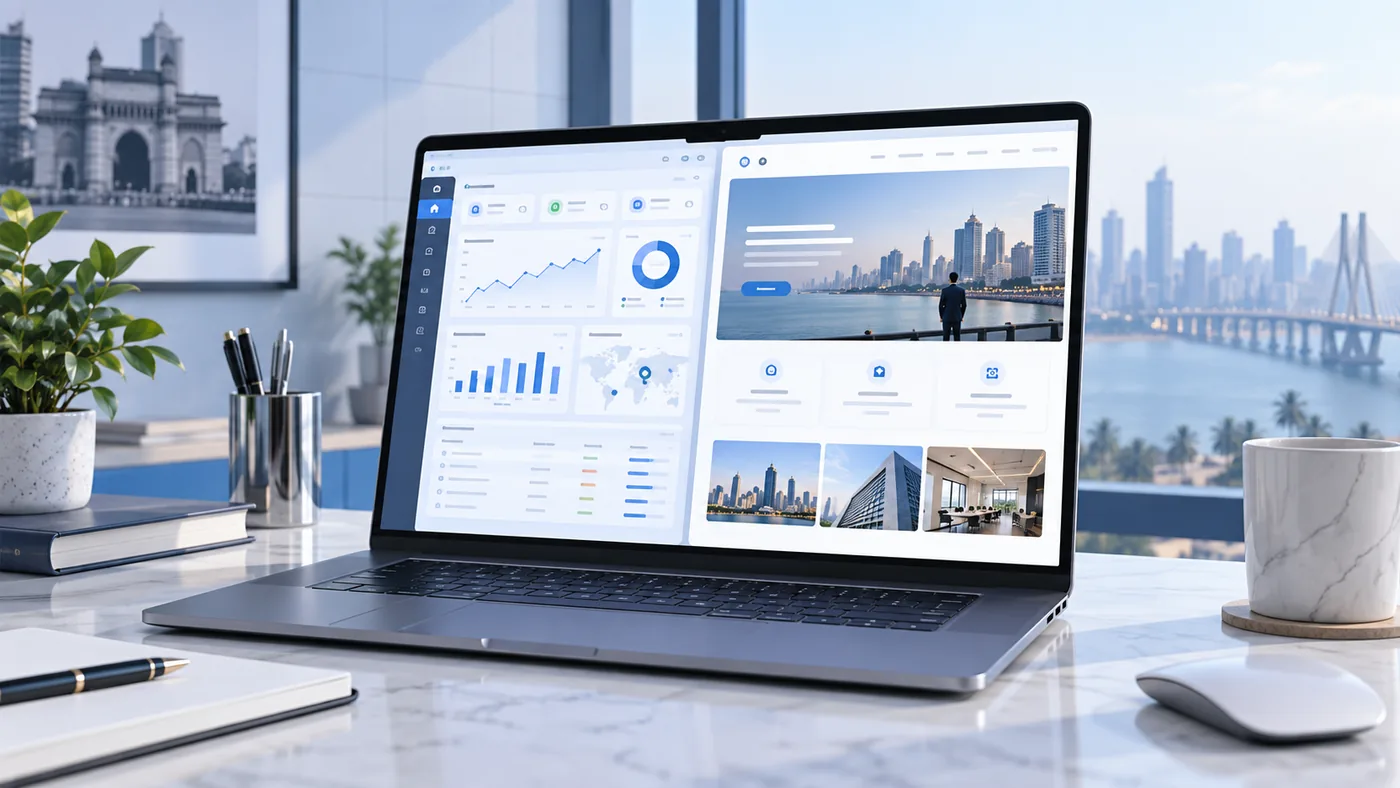
What Is Custom Website Development?
Custom website development means creating a website or web application specifically around a set of requirements.
That does not necessarily mean writing every piece of software completely from scratch.
Modern developers still use frameworks, libraries, cloud platforms and proven infrastructure.
The difference is that these tools are assembled around the business rather than relying primarily on a pre-built theme structure.
A custom site can have its own frontend design, components, data architecture, integrations and business logic.
When Do You Actually Need a Custom Website?
Custom development is useful when the website needs to do something beyond normal content publishing.
A business might require a customer portal.
A real-estate company may require property management and filtering.
A distributor may need restricted pricing.
A SaaS product requires user accounts and application logic.
A marketplace may need multiple vendor roles.
A membership business may require subscriptions and gated content.
A company may need a dashboard connected to internal data.
A service business might require a custom quotation calculator or automated workflow.
These requirements can sometimes be achieved using plugins, but stacking many plugins together can eventually become difficult to manage.
Custom development gives the business more control over how the system behaves.
When You Do Not Need Custom Development
Custom development is not automatically superior.
If you simply need a five-page business website with straightforward content and enquiry forms, WordPress or another CMS may be more practical.
If you need a normal ecommerce store, Shopify may already provide most of the infrastructure.
Building custom technology where it adds no real value can increase cost and maintenance unnecessarily.
The correct developer should be willing to tell you when custom development is unnecessary.
Custom Design vs Custom Development
These are not the same thing.
A website can have a completely custom visual design while still using WordPress or Shopify behind the scenes.
Custom development goes deeper into the functionality and architecture.
Understanding this distinction helps businesses avoid paying for technology they do not actually require.
A customised Shopify store may be exactly right for a D2C brand.
A fully custom Next.js application may be correct for a software platform.
The business requirement should decide.
Modern Frontend Development
Modern custom websites often use component-based frontend technologies.
React allows user interfaces to be divided into reusable components.
Next.js provides a framework around React that can support routing, rendering strategies, performance optimisation and full-stack functionality.
These technologies are particularly useful when the website requires advanced interfaces or application-like functionality.
Again, the technology itself should not become the objective.
Customers do not care whether a beautiful interface was built using React, PHP or another language.
They care whether the website works.
Backend Development
The frontend is what the customer sees.
The backend manages data and application logic behind the interface.
A custom application may require APIs, authentication, databases, user roles, notifications, payment logic or integration with external services.
Backend decisions influence security, scalability and maintainability.
The complexity of this layer is one reason custom websites cost more than template-based websites.
Database Architecture
A normal brochure website may not need a complex database.
A custom platform often does.
Consider a marketplace.
You may need users, vendors, products, orders, payouts, reviews and messages.
Relationships between these records need to be planned properly.
Poor database architecture can make future features increasingly difficult to implement.
That is why custom development should begin with architecture rather than immediately building screens.
API Integrations
Businesses increasingly rely on multiple systems.
A website may need to connect to payment gateways, CRM systems, email platforms, shipping providers, booking software, accounting systems or proprietary internal tools.
APIs allow these systems to exchange information.
Reliable integrations should include error handling and account for what happens when an external system becomes temporarily unavailable.
An integration is not complete simply because it worked once during development.
Custom Ecommerce Development
Most stores do not need completely custom ecommerce infrastructure.
Platforms such as Shopify and WooCommerce already solve many complicated problems.
However, highly unusual ecommerce models may require custom development.
Examples include complex B2B pricing, custom product configuration, multi-vendor marketplaces, unusual subscription systems or advanced fulfilment workflows.
The decision should be based on functionality and economics.
Custom Website Design
Technical flexibility should not come at the cost of visual quality.
A custom website should still have a clear visual system.
Typography, spacing, buttons, cards, forms, grids and responsive behaviour should remain consistent.
Reusable design components improve both user experience and development efficiency.
The best custom websites often feel simple because complex engineering is hidden behind a carefully designed interface.
Responsive Custom Development
Custom development provides significant control over responsive behaviour.
Sections can be redesigned for different screen sizes rather than merely shrinking.
Navigation can change.
Content order can change.
Interactive components can adapt.
Heavy visual elements can be simplified.
Mobile performance can be prioritised.
A custom website should therefore use its flexibility to improve the mobile experience rather than introduce unnecessary complexity.
Performance
A custom codebase gives developers greater control over how assets and functionality are loaded.
Images can be optimised.
Code can be split.
Server rendering strategies can be selected appropriately.
Caching can be implemented.
Database queries can be optimised.
However, custom does not automatically mean fast.
Poorly written custom code can perform worse than a well-optimised CMS website.
Performance still requires deliberate engineering.
SEO for Custom Websites
Custom websites can perform extremely well in organic search when SEO foundations are implemented correctly.
Problems occur when developers focus completely on application behaviour and forget crawlability.
Every indexable page should have a stable URL.
Important content should be accessible to search engines.
Title metadata should be unique.
Canonical tags should be correct.
Internal links should use crawlable links.
Sitemaps should contain the right pages.
Structured data can be implemented where relevant.
JavaScript-heavy interfaces need particular care so search engines can access important content reliably.
SEO and development teams should therefore collaborate early in the project.
Content Management
One misunderstanding about custom development is that every text change will necessarily require a developer.
That depends on the architecture.
A custom frontend can be connected to a content management system so authorised team members can update pages, articles or other information.
The CMS can be selected according to how much control the team requires.
This creates a useful balance: a custom frontend experience with manageable content administration.
Security
Custom applications may handle sensitive user or business data.
Security requirements should therefore be identified from the beginning.
Authentication should be implemented properly.
Permissions should follow user roles.
Secrets should not be exposed in frontend code.
Dependencies should be maintained.
Inputs should be validated.
Backups should exist where relevant.
Security is not one feature that gets added immediately before launch.
It affects architecture throughout development.
Scalability
Businesses often use the word scalability without defining what needs to scale.
Traffic?
Products?
Users?
Transactions?
Content?
Admin users?
Integrations?
Understanding the expected growth helps developers choose sensible infrastructure.
A small business expecting a few thousand visitors does not need the same architecture as a platform expecting millions of events.
Over-engineering can be as wasteful as under-engineering.
Website Accessibility
Custom design gives developers control over accessibility too.
Text needs sufficient contrast.
Interactive elements should be understandable.
Forms need clear labels.
Keyboard navigation should work where appropriate.
Images need meaningful alternative text when they communicate information.
Accessibility makes the experience more usable for a broader range of people and should be considered during design rather than patched later.
Admin Panels
Many custom applications need internal administration.
A good admin panel allows the business team to manage important data without accessing raw databases or asking developers for every change.
Depending on the platform, administrators may manage users, orders, products, leads, content, settings or analytics.
The admin interface deserves proper design because employees may use it every day.
Lead Management
A custom business website can go beyond sending form submissions by email.
Leads can be stored securely in a database.
Admins can view them through a dashboard.
Status can be tracked.
Notes can be added.
Notifications can be sent.
Leads can be synchronised with a CRM.
This kind of workflow can turn a website from a static marketing asset into part of the actual sales infrastructure.
Custom Booking Systems
Appointment-based businesses sometimes require more control than third-party booking widgets provide.
A custom booking system can support time slots, staff members, service types, limits, payments, rescheduling and notifications.
However, if an existing booking platform already does everything the business needs, integrating that tool may be more practical.
Custom development should solve genuine requirements.
Customer Portals
A customer portal provides authenticated users with personalised information.
Clients may see documents, invoices, orders, project updates or support information.
A portal can reduce repetitive communication and give customers a central place to interact with the company.
The exact features should be planned around real operational needs.
SaaS and Web Applications
Custom web development is essential for SaaS businesses because the website may actually be the product.
Users may register.
Choose plans.
Create data.
Invite teams.
Use application features.
Receive notifications.
Manage billing.
In these projects, frontend design, backend architecture, authentication, database design and product analytics all become important.
This is very different from developing a normal marketing website.
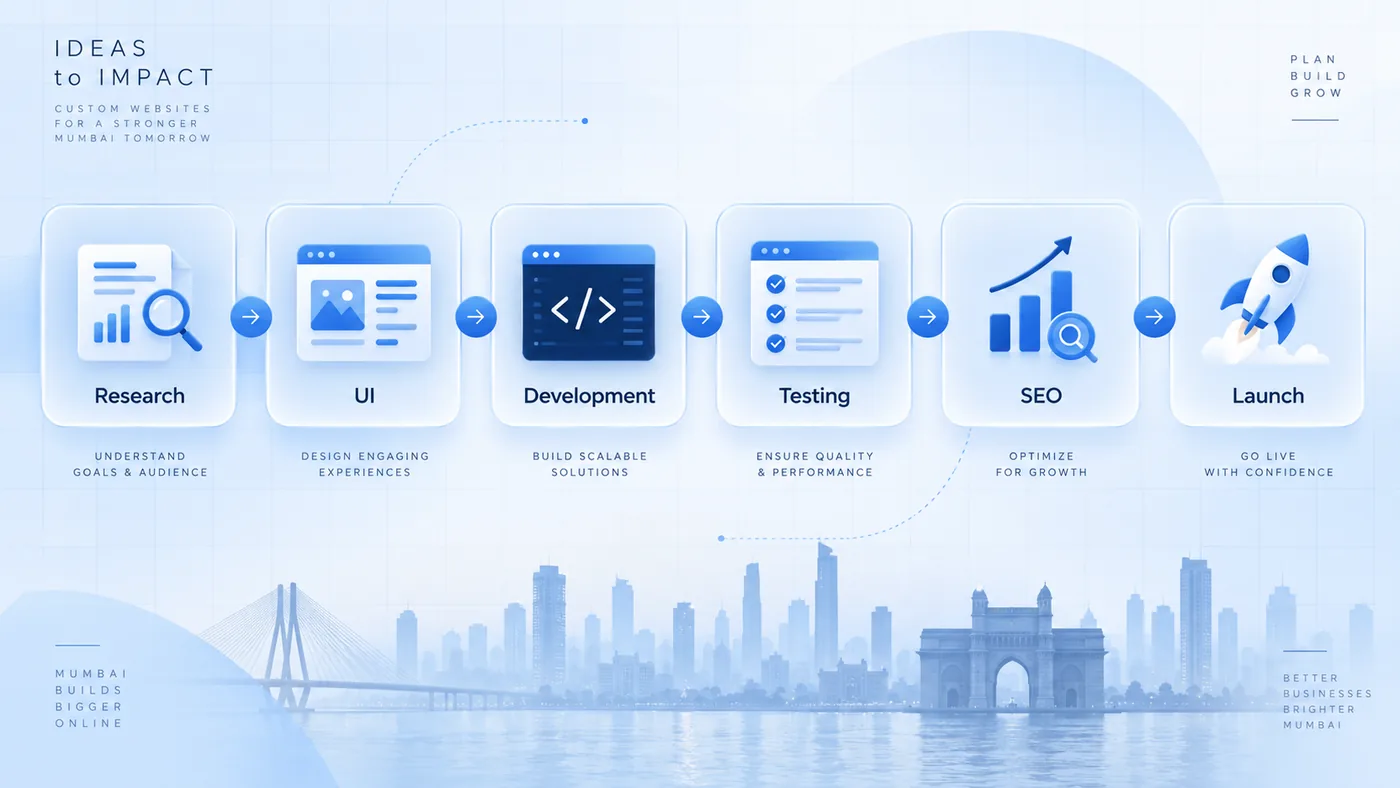
Our Custom Website Development Process
The first stage is discovery.
We identify the users, objectives, business workflows, integrations and required functionality.
Competitors and comparable products can be reviewed to understand expectations.
Requirements are then converted into a clear website or application structure.
The UI is planned before full development.
Reusable components and technical architecture are defined.
Development begins in stages.
Features are tested continuously.
Responsive behaviour is reviewed.
Integrations are validated.
SEO foundations are implemented for public pages.
The application is then prepared for production.
Post-launch maintenance can continue as requirements evolve.
Why Detailed Requirements Matter
Custom projects are more sensitive to unclear scope because functionality can expand quickly.
For example, “users should have accounts” creates more questions.
How do users register?
Can they use Google login?
Can they reset their password?
What information is stored?
Are there different account types?
Can administrators disable accounts?
Do users receive email notifications?
Each answer affects development.
A detailed requirements document reduces ambiguity and makes estimates more accurate.
Custom Website Development Cost in Mumbai
Custom development can range significantly because projects vary enormously.
A custom marketing website is one category.
A customer portal is another.
A marketplace or SaaS platform is another.
Pricing is influenced by UI complexity, page count, backend functionality, database design, user roles, integrations, dashboards, payments and long-term support.
Businesses should also consider infrastructure expenses such as hosting, email services, databases, storage and third-party APIs.
A development estimate should therefore identify assumptions clearly.
How Long Does Custom Website Development Take?
Timeline depends primarily on scope.
A custom marketing website can often be completed relatively quickly.
A complex application can require multiple stages of development and testing.
The fastest way to reduce unnecessary delays is to clarify requirements, approve designs promptly and separate essential launch functionality from features that can be developed later.
Trying to build every future idea into version one can delay the point at which real users begin providing useful feedback.
Minimum Viable Product Development
For startups, developing a minimum viable product can be more efficient than building a massive platform immediately.
The MVP should contain enough functionality to solve the core problem and collect meaningful user feedback.
Additional features can be prioritised based on real usage rather than assumptions.
A smaller well-executed first version is often more useful than a huge unfinished platform.
Website Ownership
Before starting any custom project, understand ownership.
Clarify who controls the domain.
Clarify hosting access.
Clarify source-code access.
Clarify accounts for third-party services.
Clarify ongoing maintenance responsibilities.
The company should not become completely dependent on one developer simply because essential accounts were never transferred or documented.
Ongoing Maintenance
Custom applications require maintenance.
Frameworks and packages receive updates.
External APIs change.
Infrastructure may need adjustment.
Bugs appear under unusual conditions.
New browsers and devices appear.
Businesses also develop new requirements.
Maintenance should therefore be discussed during initial planning rather than treated as an unexpected expense later.
Why Choose Digital Excellence for Custom Website Development?
At Digital Excellence, led by founder Kartavya Agarwal, custom projects begin with the business requirement rather than forcing every client into one technology.
A project may use a standard platform if that is the sensible approach, or modern custom development when greater flexibility is genuinely required.
The workflow covers category and competitor research, requirements, UI planning, development, responsive optimisation, revisions and SEO foundations.
Ongoing maintenance and SEO support can also be included according to the selected project package.
Custom Website Development for Mumbai Businesses
Modern development workflows make it possible to collaborate efficiently with businesses across Mumbai without pretending to maintain offices in every locality.
Strategy calls, design approvals, staging websites and project feedback can all happen digitally.
Whether your team operates from Andheri, Bandra, Powai, BKC, Lower Parel, Navi Mumbai, Thane or elsewhere, the important factor is whether the development partner can understand and execute the project reliably.
Frequently Asked Questions
What is the difference between a normal website and a custom website?
A normal website often uses a pre-built CMS or theme structure. A custom website provides greater control over the design, architecture and functionality.
Does my business need custom website development?
Only if your requirements justify it. Straightforward websites are often better built using an established CMS or ecommerce platform.
Can you develop websites using React or Next.js?
Modern JavaScript frameworks such as React and Next.js can be used when they suit the functionality and technical goals of the project.
Can a custom website have an admin panel?
Yes. Custom applications can include secure administration dashboards for managing content, users, leads, products or other data.
Can custom websites rank on Google?
Yes, provided public pages are crawlable and SEO fundamentals such as URLs, metadata, internal linking, structured content and technical performance are implemented correctly.
Can you integrate APIs and third-party tools?
Custom websites can integrate external services when those services provide appropriate APIs or supported integration methods.
Is custom development more expensive?
Usually, because more design, engineering and testing are required. However, it can be economical when a business genuinely needs functionality that standard platforms cannot provide efficiently.
Build Around Your Business Instead of Building Around a Template
Custom website development is valuable when technology needs to follow the way your business actually operates.
It gives you more control over experience, functionality and future development.
But custom code should exist for a reason.
The objective is not to build the most complicated website.
The objective is to build the right one.
If you are searching for a custom website development company in Mumbai for a business website, portal, ecommerce platform or custom web application, start by defining the problem clearly.
Book a free consultation with Digital Excellence to discuss your requirements and determine whether custom development is the right approach for your project.
Start with clarity
Book a Free Consultation
Share your business requirements, workflows and growth plans. You will get a practical direction on whether custom development, Shopify, WordPress or another route fits best.
Book a Free Consultation